
 Share
Share 


Molly Comier, the newly appointed executive director of the Canadian Lottery Coalition, is walking into a landscape that’s become almost impossible for ordinary people to navigate.
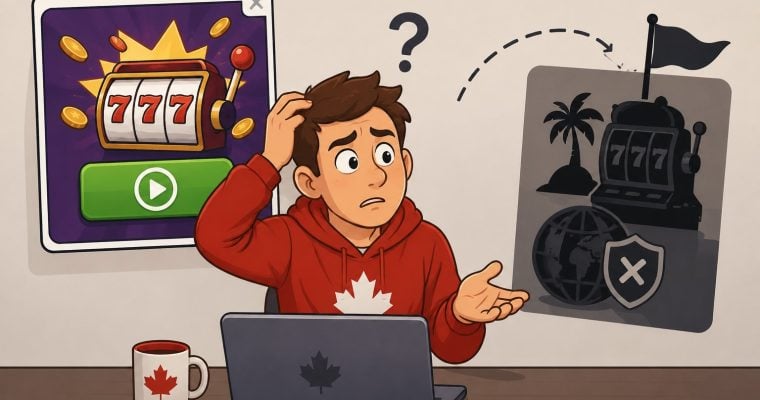
Ontario operators are running ads in Manitoba. American sportsbooks are advertising during U.S. sports broadcasts that Canadians watch. Unregulated offshore sites are using slick marketing to look just like legitimate online casinos in Canada. And caught in the middle are millions of Canadians who have no idea what’s legal in their province and what isn’t.
“Canadians are confused about what is legal and what is not,” Cormier said during the SBC Summit Canada held in May. “We owe Canadians legal clarity.”
How We Got Here
The Canadian iGaming market exploded almost overnight. Back in August 2021, single-event sports betting became legal. Suddenly, online gambling wasn’t a gray area anymore. It was official and legitimate.
That triggered a gold rush.
Within months, regulated betting operators launched legitimate platforms in multiple provinces. But right alongside them, unregulated websites flooded in. Some were based in other countries. Some operated from offshore locations. All were chasing Canadian money. And many were advertising aggressively.
Provincial lottery corporations watched this happen and realized they needed to stick together. That’s when the Canadian Lottery Coalition was born, bringing Atlantic Lottery, Loto-Québec, Manitoba Liquor and Lotteries, and British Columbia Lottery Corporation under one umbrella. Their job was supposed to be protecting consumers and the regulated market.
Instead, they’re fighting a battle against their own governments’ advertising policies.
The Parallel Domains Problem
Here’s where it gets messy. Some operators have figured out how to technically comply with provincial rules while simultaneously breaking the spirit of those rules. They’re doing it through something called parallel domains.
In a practical sense, this looks like an operator licensed in Ontario running ads in Manitoba under a slightly different web address. When someone clicks through, the site redirects them to an international affiliate. Canadians living in provinces where these platforms aren’t licensed end up gambling on them anyway.
The operator gets the business. Manitoba residents get to break provincial law without knowing it. And nobody’s really in violation because of how the loopholes work.
“There’s been marketing creative that’s specifically targeted to the citizens of that province where operators are not licensed to operate,” Cormier explained at the Summit. “That’s very frustrating.”
A recent CBC investigation found that Manitoba residents weren’t just seeing Ontario-regulated ads. They were actively using those platforms. Meanwhile, during American television broadcasts, Canadians are seeing ads for DraftKings and BetMGM advertising sign-up bonuses. Offering bonuses for iGaming is not legal in Ontario. But the ads run anyway because they’re technically airing outside the province.
The rules, it turns out, are only as strong as enforcement. And enforcement has become an inconsistent patchwork across the country.
Where Young Canadians Come In
The confusion isn’t just annoying for adults. It’s becoming a public health concern.
One in five Canadian parents with children aged 10 to 17 say their child has asked them about sports betting. The gender split is striking. Half of those inquiries came from sons. Only 24 percent are daughters. Seventeen percent from both.
Young men are being exposed to gambling products constantly. They see ads during sports broadcasts. They see influencers promoting betting apps. They see their favorite athletes endorsing sportsbooks. And they’re curious.
Cormier said the industry needs to get proactive about this. It’s not enough to hope responsible gambling messaging reaches young people. Operators and broadcasters need to ensure it does.
“When I have conversations with stakeholders, they’re consistently bringing up personal stories about young people in their lives, especially males, and how they’re engaging with gambling products,” she said. “As an industry, we don’t want to put our heads in the sand and say everything’s fine.”
The problem is that young men aren’t distinguishing between regulated and unregulated operators. They’re just seeing ads and clicking. That’s how offshore platforms grow their user base. And that’s exactly what regulators are trying to prevent.
The Social License Is Cracking
There’s a concept in industry circles called “social license.” It means the public trusts you. It means politicians are willing to let you operate because your customers and constituents support you.
The Canadian iGaming industry is burning through its social license at an alarming rate.
Patrick Harris, president of Rubicon Strategy, put it bluntly during the industry summit.
“There is way too much advertising,” he said. “It is dramatic. I think the industry is losing its social license with the public at an alarming rate.
“If the industry doesn’t do something about it themselves, the government’s going to do it.”
That threat isn’t theoretical. Ontario introduced Bill 107, the Stop Harmful Gambling Advertising Act, earlier this year, which would have banned all iGaming advertising outright. But Progressive Conservative MPPS voted it down in May as lawmakers decided to take a different approach.
That approach is Bill S-211, also known as the National Framework on Sports Betting Advertising Act. It’s currently working its way through federal Parliament, sitting before the Standing Committee on Canadian Heritage. The bill wouldn’t ban advertising completely. But it would establish national guidelines that would restrict how much operators can advertise and where.
The industry isn’t thrilled. The Canadian Gaming Association argues that advertising regulation falls under provincial jurisdiction, not federal. They point out that operators already advertise heavily on regulated platforms, especially when it comes to celebrity endorsements.
Their counterargument sounds reasonable until you realize it’s the same argument they’ve been making while the confusion spreads.
What Actually Needs to Happen
Cormier and the Canadian Lottery Coalition support Bill S-211 as a step forward. It’s not perfect, but it’s a start. Establishing national guardrails would help consumers understand what applies everywhere and what varies by province.
But the coalition opposes a complete advertising ban. Instead, they want clearer labeling, better enforcement, and a national campaign to educate Canadians about what’s actually legal.
“I’d love to do a national advertising campaign,” Cormier said. “We just want legal clarity, a level playing field, no matter what model the provinces are choosing.”
The proposed campaign would explain which platforms are regulated, which provinces license which operators, and how to spot illegitimate sites. It should be as simple as it sounds. After all, with five years of unregulated growth and confusing advertising, simplicity has become revolutionary.
The Tipping Point
What’s remarkable is that this problem didn’t have to exist. The framework for regulated iGaming was there from 2021 onward. Canadians could have had a clear, understandable system. Operators knew the rules.
Instead, the combination of weak enforcement, loopholes, and aggressive advertising created a market where confusion is the default state.
Players are paying the price. Young people are getting exposed to gambling earlier and through deceptive advertising. Consumers are unknowingly using unregulated platforms. And operators who play by the rules are losing market share to those who don’t.
The FCC learned long ago that regulations only work when they’re enforced consistently. The Canadian iGaming sector is about to learn the same lesson. Unless something changes, Bill S-211 won’t be the last attempt to fix this. It’s just the first.