
 Share
Share 


For weeks, Alberta’s regulated online gambling market had been building momentum. Each AGLC update brought new operator approvals, steadily growing the list of platforms cleared to participate in the province’s July 13, 2026, launch. However, the latest update hit a silent yet unexpected speedbump.
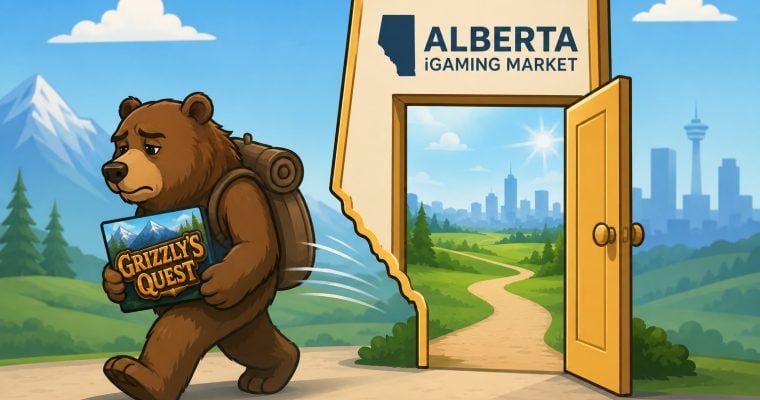
For the first time, the AGLC’s registered operator count fell — from 47 to 46. Cadtree Limited’s Grizzly’s Quest platform, which had previously secured conditional approval, vanished from the official registry without fanfare.
Simultaneously, a second major operator announced it was pausing new player registrations, raising further questions about the road ahead. With less than two weeks before Alberta online casinos and sportsbooks launch in a regulated market, these developments suggest that the AGLC is actively enforcing standards, and operators that fall short are finding that out the hard way.
What Happened to Grizzly’s Quest Conditional License?
There has been no official communication as to why Grizzly’s Quest AGLC license disappeared seemingly overnight. Reached for comment, AGLC spokesperson Lynden McBeth said: “AGLC is unable to comment on the individual status of operators and their registration.”
So the public is left connecting the dots. And those dots point in one direction: imagery.
Grizzly’s Quest is operated by Cadtree Limited, which is a subsidiary of Super Group, and it has built its brand around animated bears and moose dressed in classic Canadian gear. The flannel shirts, camping equipment, and wilderness regalia: Everything is charming, undeniably Canadian, and almost certainly the problem.
Alberta’s iGaming regulations, especially when it comes to advertising, are explicit about cartoon figures having no place in casino branding or advertising. The reasoning is straightforward: Animated characters appeal to younger audiences, and Alberta’s regulators are serious about protecting minors and other vulnerable groups.
Despite Grizzly’s Quest being removed from the list, Super Group still has four other brands on Alberta’s approved operator list, suggesting this was a simple rejection of one platform that didn’t clear the province’s strict visual standards.
The episode serves as an early warning shot to the broader industry: Alberta isn’t just rubber-stamping approvals on operator applications.
LeoVegas Pauses Alberta Pre-registrations for Now
Grizzly’s Quest is not the only name conspicuously absent from Alberta’s approved operator registry. LeoVegas, the Swedish-owned gambling giant acquired by MGM Resorts International and one of Ontario’s most established online casino operators, is also sitting out the July 13 launch. But unlike Grizzly’s Quest, its reasoning is now on the record.
LeoVegas has been active in Ontario’s regulated market since the province’s April 2022 launch. It currently operates both its flagship casino and sportsbook alongside the Royal Panda casino brand. Given that track record, Alberta seemed like a natural next step. The company had even recruited Toronto Maple Leafs icon Mats Sundin as a celebrity ambassador, signaling genuine intent to deepen its Canadian footprint.
But that expansion is not happening, at least not in Alberta as of yet. The company has officially confirmed it will not be pursuing an AGLC license, with Albertans currently unable to register on the platform. Albertans attempting to register with the platform are currently met with the following message: “We have paused new signups in Alberta for the time being.”
The reason behind it, as LeoVegas framed it, is purely strategic. Communications Manager Daniel de Morais told Canadian Gaming Business last week: “We continuously conduct strategic reviews of our business to ensure we stay competitive, that our strategy supports a clear long-term direction, and that we meet our sustainable growth ambitions. In line with this, we have decided to stop access to our services from Alberta to fully focus on growing our existing business in Ontario.”
It’s a significant reversal for a brand that appeared Alberta-bound. But in a market where regulatory standards are already claiming casualties, LeoVegas may have simply decided that consolidating its existing position was the smarter play.
Where Alberta’s iGaming Market Stands With Less Than 14 Days to Go
Two high-profile absences aside, Alberta’s upcoming regulated iGaming market is shaping up to be among the most competitive Canada has ever seen. As of June 26, the AGLC’s conditionally approved operator list stood at 46 platforms, covering both online casino and sports betting products across the province.
The roster of confirmed Day 1 operators reads like a who’s who of the global gambling industry. DraftKings, BetMGM, FanDuel, Betway, and Penn Entertainment’s portfolio of brands are all cleared for launch. This signals that, despite the regulatory friction, the biggest players in the business see enormous opportunity in Alberta and for good reason.
Analysts estimate the province’s regulated market could generate upwards of $700 million USD in its first year alone, fueled by a population of approximately 4 million adult residents and a sports culture that runs exceptionally deep.
But entering that market comes with strings attached. A June 18 update to the AGLC’s iGaming advertising standards drew clear lines around how operators can communicate with consumers. Publicly advertising bonuses, free bets, or gambling incentives is now prohibited, unless the promotion is delivered directly through an operator’s own platform or via targeted marketing to players who have explicitly opted in.
Celebrity endorsements, athlete appearances, social media influencers, and cartoon imagery are all off the table in advertising materials. The AGLC has also reserved the authority to withdraw any promotion it considers inconsistent with responsible gambling principles or the broader integrity of the industry.
The message from Alberta’s regulator is consistent: This market is open for business, but only on its terms.