
 Share
Share 


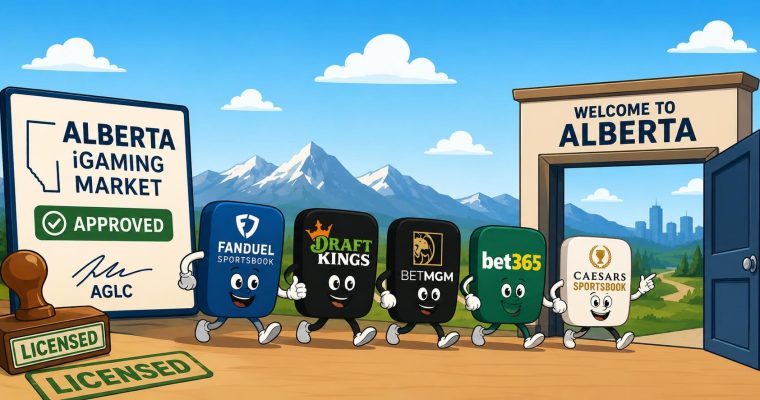
Alberta’s growing list of sportsbooks and online casinos coming to the province reached 28 this week, with major operators set to launch on July 13. Top betting brands including FanDuel, DraftKings, BetMGM, and Caesars are among the companies approved by the Alberta Gaming, Liquor and Cannabis (AGLC) to operate in the province once the market goes live.
The market launch will make Alberta the second Canadian province to adopt an open licensing model for private online sportsbooks and casinos, following Ontario’s regulated market rollout in 2022.
Major iGaming Brands Coming to Alberta
Alberta’s iGaming expansion represents a significant shift for Alberta’s online gambling sector, which has so far been limited primarily to the government-run PlayAlberta platform. Under the new system, private operators will be able to legally offer online casino gaming and sports betting to players across the province after completing regulatory requirements with the AGLC and Alberta iGaming Corporation.
Industry analysts expect Alberta to become one of Canada’s largest regulated betting markets due to its population size and strong existing demand for online wagering.
Find the full list of 28 approved operators and 20+ suppliers on our Alberta online casinos guide. Major operators set to launch in Alberta include:
- Caesars Sportsbook/Caesars Palace/Horseshoe
- BallyBet
- BetMGM
- DraftKings
- FanDuel
- Golden Nugget Online Gaming
- PointsBet
- BetRivers
- theScore Bet
Additional operators and supplier brands are also expected to join the market as Alberta finalizes licensing and compliance approvals ahead of launch.
Alberta Forging Own iGaming Path
Unlike Ontario, Alberta’s new iGaming market will launch with several stricter regulatory rules and structural differences. One of the biggest distinctions is Alberta’s ban on political betting markets, which are currently permitted in Ontario under the AGCO’s “novelty betting” category. Alberta regulators have taken a more conservative approach by prohibiting wagers on elections and political outcomes altogether.
Alberta is also introducing higher operator costs. Licensed operators will reportedly pay a $150,000 annual registration fee per site along with a one-time $50,000 application fee, compared to Ontario’s $100,000 annual registration model with no upfront application fee.
The province is expected to enforce tighter advertising standards as well, including restrictions on the use of active and retired professional athletes in gambling promotions. Alberta’s framework will also include a centralized self-exclusion system that applies across all regulated gambling platforms in the province.
While Alberta’s market structure largely follows Ontario’s open-market model, these differences suggest the province is aiming for a more tightly controlled launch focused on responsible gambling and consumer protections.