
 Share
Share 


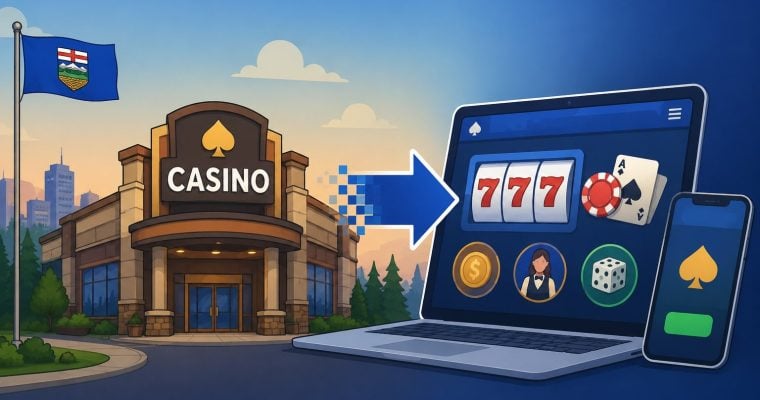
After nearly four years of planning, collaborations, and preparations, Alberta is finally channelling its gambling grey market into a legal and regulated space. Come mid-July, Albertans will be able to place bets on the FIFA World Cup, spin an online slot, and even play live dealer games at big-name brands like FanDuel, BetMGM, DraftKings and many others, all operating within a new local framework.
And according to Service Alberta and Red Tape Reduction Minister Dale Nally, land-based operators in the province should not shy away from leveraging this change to expand their offerings. The lawmaker has been the driving force behind the province’s sweeping overhaul of regulated sports betting and iGaming since 2023 when Premier Danielle Smith tasked him with working with Indigenous partners to develop and implement an online gaming strategy.
Speaking at the SBC Summit Canada held in Toronto in May, Nally said: “I hope to see as many land-based operators in Alberta participating in the online space.”
There’s More Than One Way In
Gambling has always been about curating an experience. From the feel of weighted chips in your hand to the buzz in crowded rooms to those high-stakes moments that leave you at the edge of your seat — physical gambling offers tremendous entertainment value, which is precisely what Canadian online gambling sites have been trying to replicate from the very beginning.
For this reason, land-based casinos may actually have a competitive edge as Alberta online casinos and sportsbooks launch on July 13. With years of curating in-person experiences through building customer loyalty, understanding player behaviour, and delivering exciting entertainment opportunities, such assets translate very well in the online space. And that’s precisely why Nally is urging retail gambling operators in Alberta to take advantage of the upcoming regulated iGaming market.
More interesting, though, is that there’s no one specific way to participate. They can choose to partner with a licensed private operator, or they can opt to bring their own product to the market, as the River Cree Resort and Casino intends to do. Nally made it clear that the province intentionally avoided limiting operators to a single entry model, unlike jurisdictions such as New Jersey and Pennsylvania.
“One thing that I didn’t want to do is have online casinos that had to be tied to a land-based casino,” Nally said at the Summit.
“This is because our approach will always be individual personal choice and individual responsibility, and that is best defined by an open market, and you don’t have an open market if you force online operators to tie themselves to land-based casinos. So, we didn’t want to go that approach, but we are certainly encouraging land-based operators to participate in the space, and we’re also encouraging First Nations.”
How Retail Gambling Operators Can Compete
Truth is, online gambling cannot fully replicate the immersive experience we get from land-based casino experiences, no matter how much they try. Far more than the gaming experience, these facilities have grown to become experience-driven destinations.
A 2024 Casino Trends Report from marketing firm LT, formerly LaneTerralever, revealed that three-quarters of guests consider alternative forms of entertainment when choosing which land-based casino to patronise. In fact, 20% of a casino visit is spent on non-gaming activities, including hotel amenities, restaurant and dining, live entertainment options, on-premise shops and boutiques, etc.
So, how does this translate for retail gambling operators navigating Alberta’s soon-to-launch regulated market?
The Case for Omnichannel
The reality of land-based casinos in Alberta is that while they have loyal customers, research suggests that those same customers are playing digitally with a different brand. Going with an omnichannel approach, which involves these retail operators securing iGaming licenses to offer their already established gambling products, will help unify gambling experiences for their customers.
Think unified player wallets, integrated loyalty schemes, and marketing that flows naturally across every touchpoint. That way, even though players may not visit a physical location frequently, providing such frictionless experiences not only makes it easier and more enjoyable, but can also help get people connected to the brick-and-mortar facility as well as other players using the facility.
Speaking at a panel titled “Omnichannel marches on: are the bricks and mortar crowd catching up?” at the Summit, Bede Gaming CEO Colin-Cole Johnson said:
“If you put another wallet in place, that you have to deposit into, customers may not want to use it – they have a bank account already – you’re creating a bit of friction with players who maybe don’t want it. We see that in lottery, with things like Direct Pay, and subscriptions – remove that step, especially for customers who are retail orientated, keep it simple.
“Younger players want to participate and connect with other players. Digital products today can be a bit soulless and lonely in their experience. If you help build that connection, it will appeal to a younger audience.”
Leveraging Technology
When looking at Alberta’s open iGaming market from the perspective of land-based operators, many associate this big shift with potential revenue losses for the retail side. But evidence from Ontario as well as other regulated iGaming jurisdictions suggests that the growth of online gaming, no matter how remarkable, does not come at the expense of brick-and-mortar operators, especially for those attempting to keep up with the latest tech on the market.
Land-based operators who leverage live dealer games help bridge the gap between online and physical experiences. Pair this with augmented and virtual reality technologies that help bring immersive experiences to life, and you have a compelling proposition for players on both sides of the divide.
Beyond the player experience, data-driven tools help operators track player behaviour across retail and digital platforms. This allows operators to personalise offerings, tailor promotions, and build stronger customer relationships — all while gaining a meaningful competitive advantage.
Partnerships & Acquisitions
There is no single route for Alberta land-based casinos to enter the new iGaming space. Not every operator will have the resources to launch its own online gambling product from scratch. Partnering with established online gaming brands or acquiring existing iGaming platforms is another effective strategy, one that has already proven its worth elsewhere.
MGM Resorts, for example, took this path when it joined forces with GVC Holdings in 2018 to form BetMGM, now one of the most recognizable operators in the U.S. market. Closer to home, Indigenous Gaming Partners Inc. (IGP) appears to be taking a similarly calculated approach. Having acquired all seven Pure Casinos across the province in 2024 and announcing its intention to acquire Alberta-based casino owner Gamehost Inc., IGP has been quietly consolidating its land-based footprint.
Combined with its secured AGLC iGaming approval ahead of market launch, IGP intends to pair its established physical casino business with a digital presence. So, Albertans should expect access to a unified venue through the largest casino operator in the province.
Mobile Experiences Are Still No. 1
About 93.4% of Albertans own smartphones. That single statistic tells land-based operators where their digital products need to show up. The rapid growth of mobile device adoption has fundamentally shifted how people engage with online entertainment, and gambling is no exception.
For Alberta’s retail casino operators eyeing the iGaming space, a mobile-first approach is much more than a nice-to-have addition to a digital strategy. Players now expect to access their favourite games on the go. On top of that, they want that experience to be as smooth, fast, and intuitive as possible.
In other words, land-based operators looking to expand their footprint into Alberta’s iGaming market, the quality of their mobile product will be key. Responsive design, fast load times, and a well-structured game library are now baseline expectations. For operators already familiar with delivering high-quality in-person experiences, the challenge now would be translating that same standard to a smaller screen.
Alberta Casinos Must Offer The Best of Both Worlds
On paper, Alberta’s online gambling space is expected to grow exponentially, with lawmakers projecting over $100 million in iGaming revenue. But revenue figures alone do not tell the full story.
Research shows that 58% of players prefer online gambling over in-person visits. Yet that same research makes clear that a preference for digital does not eliminate the appetite for a quality physical experience. Players still visit brick-and-mortar venues, but they simply expect more from them.
For Alberta’s land-based operators, iGaming is both a threat and an opportunity. Those who integrate digital and physical offerings stand to retain players across both channels. Those who don’t risk losing them to competitors who choose to leverage both sides.