
 Share
Share 


As Alberta prepares to launch its regulated iGaming market on July 13, the province has defined its plan to protect the First Nations Development Fund (FNDF) amid fears that iGaming suppliers may cannibalize land-based casino revenue.
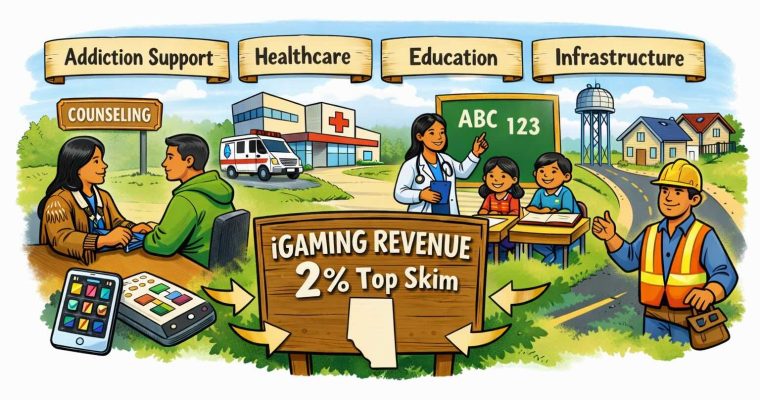
According to public documents from Alberta Liquor, Gaming, and Cannabis (AGLC), all iGaming suppliers in Alberta’s new and regulated market will have to allocate 2% of the Gross Gaming Revenue to the First Nations Development Fund to continue funding social responsibility projects from gambling revenue in First Nations communities.
Together, these changes signal a shift toward a more sustainable and inclusive funding model—one that protects existing revenues while ensuring all First Nations communities benefit from Alberta’s expanding iGaming market.
How the 2% Top Skim Changes Alberta First Nations Funding Structure
Before Alberta’s plan to transition to a regulated iGaming market, the First Nations Development Fund had relied wholly on revenue generated by the six land-based casinos in the six Host First Nations of Alberta. In a Saskatchewan-like arrangement, the Host First Nations get a massive cut of each casino’s revenue, with a substantial chunk also going into the FNDF.
More precisely, 70% of all slot revenue goes to the provincial government of Alberta, which in turn allocates 40% to the First Nations Development Fund. Historically, the funds are further allocated using a 75/25 split, where the bigger chunk (75%) funds projects in the Host First Nations and the smaller chunk goes to the non-host First Nations communities.
With the introduction of iGaming funding, however, the FNDF will not have two pots, one for revenue from land-based casinos and the other for iGaming revenue. The former will continue using the historical sharing formula, and the latter will distribute funds equitably among all First Nations.
Alberta’s Planned iGaming Revenue Distribution
Alberta’s shift to a regulated iGaming market includes a revenue distribution framework designed to prioritize social responsibility, promote responsible gambling, and ensure continued support for First Nations communities that have historically hosted and benefited from land-based casinos.
The revenue distribution framework allocates a 2% top skim from the Gross Gaming Revenue to the First Nations Development Fund and another 1% to social responsibility projects.
Whatever’s left is split 80-20 between the iGaming operator and the provincial government of Alberta, with the former covering any operational costs and the latter contributing to the Alberta General Revenue Fund.
FNDF Overview: How do the First Nations Use the 2% Top Skim?
Per the First Nations Development Fund Grant Agreement, the First Nations Development Fund has eligible uses that govern the use of the First Nations fund.
According to the agreement, eligible First Nations must use the monies to fund addiction programs, healthcare, education, and infrastructure in eligible communities. On the flip side, the operation, development, or acquisition of a casino is ineligible for First Nations funding.
Also, the fund cannot be used to create or provide a Security Interest in the grant monies and cannot fund per capita distributions.
The different First Nations identify priority areas for community members and allocate funding appropriately. For example, the Tsuut’ina Nation has substantially upgraded its local firefighting capabilities primarily with First Nations funding, as a public report suggests $2.4 million spent on the community’s local fire department in 2020-21.
What This Means for the Future of the First Nations Development Fund
Since the 2% First Nations top skim is added to the existing revenue sources for the First Nations Development Fund, experts and policymakers expect the transition to regulated iGaming to improve funding for all First Nations communities. As it stands, First Nations get nothing from online gaming revenue, as PlayAlberta, the sole recognized iGaming platform in Alberta, currently doesn’t fund First Nations at all.
Some First Nations have pushed against this anomaly, with a coalition of Nations filing a joint lawsuit against the Alberta government for cannibalizing the revenue of Host First Nations casinos without a revenue-sharing arrangement in place to support First Nations and host communities.
With the transition to a regulated iGaming market mandating 2% top skim on all iGaming revenue, however, the First Nations Development Fund will stal alive, notwithstanding the feared cannibalization of land-based Host First Nations casinos.