
 Share
Share 


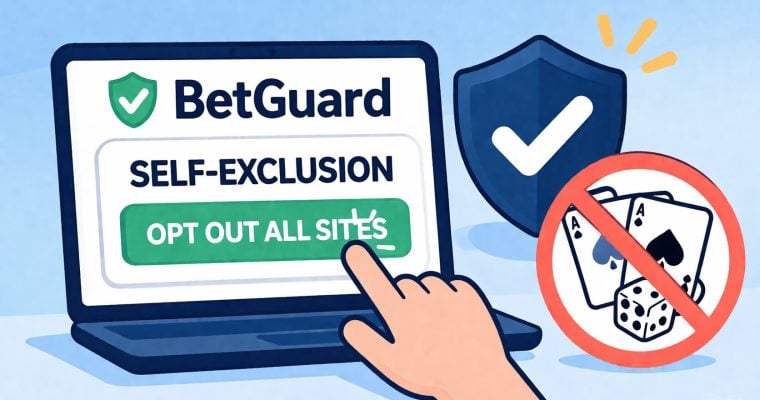
Ontario has unveiled BetGuard, a centralized self-exclusion system expected to launch in May 2026 that will let players opt out of the province’s regulated online gambling market through a single process.
The tool, developed by iGaming Ontario with Integrity Compliance 360 and Dataworks, is designed to close gaps in the current system and make it easier for players to step away when needed.
The move comes as Ontario’s regulated market continues to expand, with 48 operators and 82 gaming sites now live. Until now, players had to self-exclude across operators individually, creating friction and leaving room for missed steps.
How BetGuard Works
Using BetGuard is simple. A player signs up once, verifies identity, and chooses how long they want to stay out. Once activated, the exclusion applies across every regulated site in the province at once.
Regulatory standards from the Alcohol and Gaming Commission of Ontario (AGCO) ensure consistent enforcement. Operators must block account access, prevent new registrations, stop marketing communications, and refund unused funds while cancelling and refunding qualifying outstanding wagers.
The result is a standardized process across the market, where every operator follows the same rules, and every player gets the same level of protection.
Why This Matters for Players
The introduction of BetGuard expands how self-exclusion functions across the market.
For players, the headline benefit is convenience, but the bigger story is fewer gaps. A site-by-site system creates more chances for missed steps, repeat signups, and different rules across different operators.
It also fits the wider push to make gambling tools at Ontario online casinos and sportsbooks more consistent across operators. iGaming Ontario has for some time framed centralized self-exclusion as a priority, alongside mandatory responsible gambling accreditation and other province-wide standards.
BetGuard does not solve every problem by itself, but it makes one of the strongest safety tools a lot easier to use at the moment it matters most.
Alberta to Follow Suit
Alberta is already following a similar direction as it prepares to launch its regulated iGaming market this July.
Guidance from Alberta Gaming, Liquor and Cannabis Commission (AGLC) indicates that operators will need to integrate with a centralized self-exclusion system as part of compliance.
Alberta’s model may even go a step further in scope when it comes to self-exclusion from Alberta online casinos, sportsbooks, and more. AGLC says players will be able to choose exclusion from all registered iGaming, from all land-based casinos and racing entertainment centres, or from both at once.
That is an early sign Alberta is not taking a lighter approach on player protection, and that the province is moving toward the same kind of centralized safeguard Ontario is now rolling out.
What Comes Next
If both systems roll out as planned, players in the two largest Canadian online casino and sports betting markets should start seeing a more consistent approach to self-exclusion.
Implementation details may differ between provinces, though the overall direction is clear. Self-exclusion is moving toward broader coverage and simpler access across regulated platforms.
For players, the process becomes more direct, with a single action applying across the entire market.