

 Share
Share 


As Alberta continues to work towards launching its iGaming market, Dale Nally, the minister responsible for launching the regulated market, says player safeguards are at the centre of the framework.
After making stops at the Global Games Expo and the North American Blockchain Summit in Las Vegas in October, Nally said he gained practical insights on responsible gambling and blockchain technology.
“So being able to meet with some vendors, and to be able to attend some lectures on responsible gambling was incredibly important,” Nally said. “Because ultimately we want them to come to Alberta and invest, and so it was a good chance to connect with them and talk about what next steps look like.”
iGaming Alberta Act Doesn’t Provide Specifics on Responsible Gambling
The iGaming Alberta Act passed last Spring, marking the first phase of implementation in the province’s overhaul of the legal online gambling landscape. But one of the points of contention from the opposition before the passing of Bill 48 was that it had many blanks when it came to critical issues like responsible gambling.
“While this government is very keen to profit from online gambling, it has somehow forgotten to build in the most important protections for the people who will be impacted: families, youth, seniors, and vulnerable Albertans who are at risk of gambling harm,” said New Democratic Party MLA Gurinder Brar in April.
Brar advanced some amendments to Bill 48 before it moved to the committee discussion in the spring. At the time, among the tweaks he proposed was setting up a “responsible gambling program focused on harm reduction” along with a standard independent review to check how well the RG program works.
Multiple other NDP MLAs supported Brar’s proposed amendments, some even stating Bill 48 was a “deeply incomplete” piece of legislation. However, these proposed changes were shot down by 38 nay votes from UCL MLAs against 16 yays.
Nally Stressed that RG was a Regulation Issue, Not a Legislative One
After Brar’s monologue on why the amendments package should be included in Bill 48, Nally responded that responsible gambling measures shouldn’t be a legal matter, but a regulatory matter.
“We don’t want to put player safety in legislation,” Nally said. “We want to put it in regulation so that if we see something we want to turn around on a dime, we’re able to do it through an order in council, not a new piece of legislation. I’m saying this to make the conversations shorter around this room: We don’t have to debate player safety, gambling responsibility. There is no light between us. I assure you, we are all 100% aligned. … But we’re going to do it in the most efficient and effective manner possible, and that’s through regulation.”
And true to this, Nally and his team have switched up to drafting regulations and setting up the Alberta iGaming Corporation (AiGC), which will be responsible for the daily running and management of online gaming in Alberta.
Nally said, “We’ve already passed the Alberta iGaming Act in spring, so that legislation has been passed. What we’re working on right now is the regulations and the policy and we’re also starting up the Alberta iGaming Corporation.”
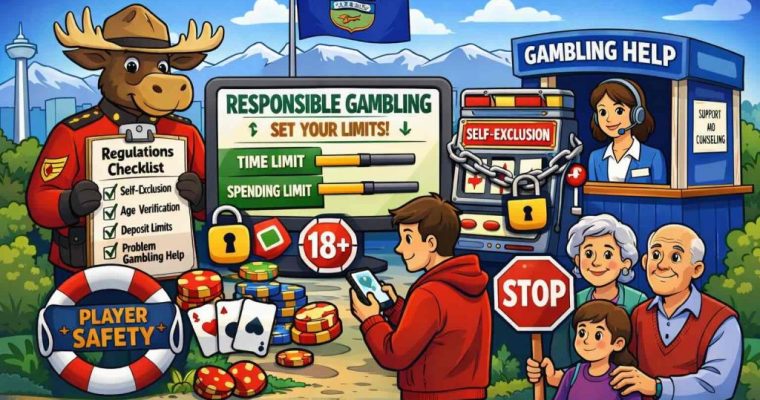
Speaking recently about regulation, Nally also said a legal framework is the only way to fight against offshore sites, as well as setting up robust player protection tools. Among the planned player safeguards are a system-wide self-exclusion system, which will let users click out of all licensed casino sites, land-based gambling establishments, and racing entertainment centres.
“Are you bringing online gambling to Alberta? And the answer is, no, I’m not,” Nally said. “It’s already here, and it’s happening in an unregulated fashion. Player safety is not important, responsible gambling is not important, and all the money leaves and goes offshore.”
The Current State of Alberta iGaming
Nally’s comments about regulation and player protections sum up the way a lot of provinces and international regulators have been dealing with gambling oversight. They actually keep their responsible gaming plans under regulations instead of codifying them, so they can tweak them as things change with tech and how people behave.
These regulatory frameworks let governments bring in new tools—think real-time monitoring systems, age-verification checks that are a bit more robust, or even more in-depth reporting requirements from operators—without having to go through the hassle of rewriting the whole law from scratch.
As the online betting world is constantly changing, introducing new features like personalised promos or faster betting formats that can increase risk, if not managed properly, this flexibility has become pretty important. Regulations give the government room to move quickly, especially when new strategies for reducing harm come out, or new research shows a better way to keep players safe.
By making regulations the focus, Alberta is lining up with the trend in modern gambling governance. It’s keeping the base law stable while letting the detailed rules that protect players evolve as needed.
Nonetheless, the end goal remains the same: to have Alberta’s iGaming rollout happen in early 2026. At present, the minister in charge of this overhaul has received applications for five AiGC board members, a crucial step for setting up Alberta’s online gambling scene.
