
 Share
Share 


Identity checks at regulated Canadian iGaming platforms go beyond a simple sign-up, and understanding the process can determine how quickly players can bet, play, and withdraw.
As provincial regulated markets mature, Ontario now hosts 49 registered operators handling $82.7 billion in annual wagers in 2024–25, while Alberta prepares its own regulated launch. Identity verification is becoming a central part of the player experience.
For players, knowing what documents are required and how verification works can help prevent common issues like account restrictions or delayed withdrawals. Here is what players need to know before they register.
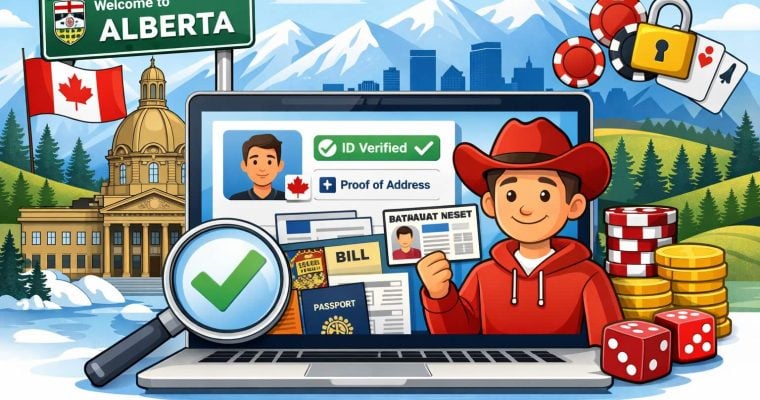
What Documents Players Need and Why They Matter
Regulated operators may require documents across multiple categories for account verification.
These typically include proof of address, identity verification, and in some cases financial confirmation tied to a bank or credit account.
Accepted documents often fall into three broad groups (exact requirements vary by operator):
Proof of address
- Utility bill (electricity, water, or phone)
- Canada Pension Plan (CPP) statement
- Property tax assessment issued by a municipality
- Provincially issued vehicle registration
- Benefits statement from federal, provincial, territorial, or municipal levels
- Canada 411
- Record of Employment
- Registered investment account statements (RRSP, TFSA, or RRIF)
- Canadian credit file that has been in existence for at least six months
- Product from a Canadian credit bureau or other third party containing two trade lines in existence for at least six months
- Insurance documents (home, auto, or life)
If you don’t have any of the above:
- A scan or electronic image of Canadian government-issued photo identification
Personal identification
- Birth certificate
- Citizenship certificate
- Temporary driver’s license (non-photo)
- Canadian credit file that has been in existence for at least six months
- Product from a Canadian credit bureau containing two trade lines in existence for at least six months
- Investment account statements (RRSP or GIC)
- Insurance documents (home, auto, or life)
If you don’t have any of these:
- A scan or electronic image of Canadian government-issued photo identification, permanent resident card, or travel visa (foreign government)
Financial verification
- Credit card statement
- Bank statement for deposit or chequing accounts
- Loan account statement (for example, mortgage)
- Cheque processed in the last statement period by a financial institution
- Telephone call, email, letter, or other traceable confirmation from the financial entity holding the account
- Product from a Canadian credit bureau containing two trade lines in existence for at least six months
- Use of micro-deposits for confirmation
Issues often arise when information does not match across documents or when details are outdated. In those cases, accounts may remain restricted, which can leave accounts partially restricted or delay access to certain features.
Operators also enforce local eligibility rules. Caesars Entertainment, for example, requires players to be 21 or older for real-money gaming in Alberta.
How Casinos Verify Identity and Register New Users
The registration process follows a standard path across most regulated platforms, beginning with account creation and document submission before verification is completed.
Some operators run automated checks at sign-up using third-party databases to confirm identity and age. Play Alberta, for instance, uses a soft inquiry through Equifax Canada, which does not affect a player’s credit score.
Most verifications are completed quickly, but discrepancies such as mismatched names or addresses can trigger manual review and temporarily limit account access.
Operators must also comply with anti-money laundering requirements tied to the Financial Transactions and Reporting Analysis Centre of Canada (FINTRAC), which is why identity requirements go beyond a simple sign-up process.
Geolocation Rules and Withdrawal Checks
Location verification is required before deposits or wagers are allowed. Operators use geolocation, a combination of IP data, device signals, and GPS tracking to confirm that players are physically within the province.
Players can register from outside a province, but cannot deposit or place bets unless they are within that region. Attempts to bypass these restrictions, such as using VPNs, are typically blocked.
Withdrawals are subject to additional verification. Before funds are released, operators may request confirmation of identity and payment details. Operators may require withdrawals to be sent to verified accounts held by the player and may request extra documentation to satisfy AML and FINTRAC-related compliance checks.
Play Alberta processes withdrawals to verified Canadian bank accounts, PayPal, or Interac e-Transfer, with minimum thresholds in place. Credit card deposits must be refunded to the original payment method. Players who complete verification early are less likely to encounter delays.
What This Means for Players
Identity verification is a core part of the regulated online casino experience in Canada, and those looking to sign up for Alberta online casinos and sportsbooks markets will need to follow these protocols.
Players who understand document requirements, location rules, and withdrawal checks can avoid the most common delays tied to account access and payouts.
As Alberta prepares to launch, similar verification and withdrawal controls are likely to be a routine part of the onboarding process on newly regulated platforms.