
 Share
Share 


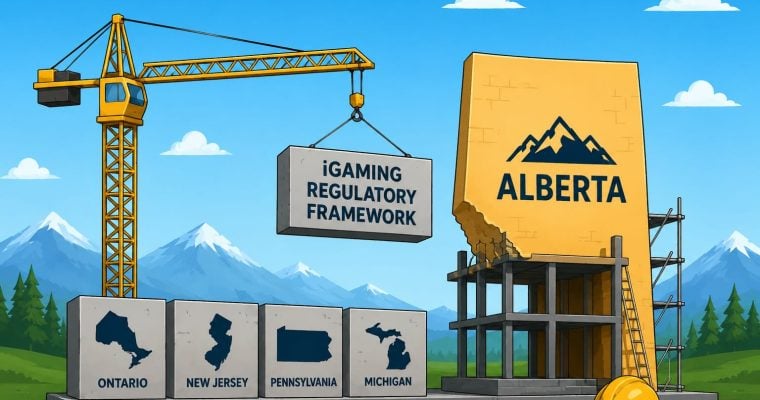
Come July 13, 2026, Alberta will officially join the growing list of regulated iGaming markets across North America. Apart from Canada’s very own Ontario, the likes of Pennsylvania, Michigan, Connecticut, New Jersey, and West Virginia are already years into their regulated frameworks, collectively contributing to a market that generated $16.56 billion in revenue in 2024 alone.
That number is not slowing down, either. The North American online gambling market is projected to reach nearly $33 billion by 2030. That means Alberta is stepping into one of the fastest-expanding regulated markets in the world, even though it’s arriving later than most.
But that is not necessarily a disadvantage.
Watching other markets launch, stumble, and self-correct gives the province a clearer picture of what to focus on and what to avoid. The Alberta Gaming, Liquor, and Cannabis (AGLC) has had that runway, and the framework it has put together reflects it: stricter in some areas, more deliberate in others, and structured around Alberta’s specific market conditions.
So before the July 13 launch date arrives, it is worth understanding exactly what sets the province apart and why the rules governing Alberta online casinos and sportsbooks are a deliberate departure from the North American norm.
Alberta iGaming is Playing By Its Own Rules
Since 2020, legal online gambling has been possible only through PlayAlberta. Like other Canadian provinces, except for Ontario, the Wild Rose Country implemented monopolistic controls, creating an online platform that wasn’t necessarily designed to compete. After all, it offered no real variety and had no pressure to innovate. And that’s how unregulated platforms dominated 70% of Alberta’s online gambling market.
Ontario had a similar story before 2022. Offshore gambling dominated the market until the provincial government decided to open the market to private operators willing to meet strict regulatory conditions. Today, more than 44 licensed operators and about 76 gambling websites serve Ontario players legally and transparently. And Alberta watched the transition as it prepared to make its own move.
Following the passing of the iGaming Alberta Act, the AGLC will serve as Alberta’s market regulator. The Alberta iGaming Corporation (AiGC), on the other hand, will oversee the day-to-day management of online gambling operations in the province. The structure may look familiar to Ontario’s on the surface, but the rules Alberta is launching with tell a different story.
Key differences that separate Alberta’s framework from Ontario’s include:
- Centralized self-exclusion system. Rather than leaving players to opt out platform by platform, Alberta launches with one province-wide exclusion system that covers both online and land-based commercial gambling simultaneously. One request, full coverage.
- Advertising comes with hard limits. Operators cannot target minors, vulnerable individuals, or anyone flagged as high-risk. The ban on using active or retired athletes in marketing campaigns is another restriction that goes further than most comparable markets.
- Responsible gambling is a priority. Licensed operators must build deposit limits, spending caps, and session time controls directly into their platforms from launch. If a player starts showing signs of problem gambling, intervention is mandatory.
- Revenue stays local. The provincial government of Alberta takes 20% of iGaming revenue. Two percent of that goes directly to First Nations communities, and another 1 per cent funds gambling research and addiction treatment programs.
- Getting licensed is a two-step process. Operators need to apply for a license with the AGLC and also sign an operating agreement with the AiGC before going live in the Wild Rose Country.
The goal for Alberta iGaming is to pull players away from offshore grey-market sites and into a regulated system that actually cares for their protection. Whether this approach helps or complicates that mission is what the market will decide after July 13.
iGaming Regulation Across North American Markets
Alberta’s iGaming framework is not built in a vacuum. The markets that came before it, some thriving, some still finding their footing, offer a clear picture of what regulated iGaming looks like in the North American region when it actually works. And more importantly, what it looks like when it does not.
New Jersey: The Market Set the Mark
New Jersey legalized online gambling in 2013, making it one of the earliest adopters in North America. More than a decade later, it remains the benchmark most markets measure themselves against.
The framework is built around one non-negotiable requirement. Every operator must partner with a land-based Atlantic City casino to legally serve players in the state. Today, New Jersey is home to 30+ legal online casinos and at least 14 legal betting sites.
The New Jersey Division of Gaming Enforcement handles licensing and compliance, along with other regulatory bodies, including the New Jersey Casino Control Commission (CCC) and the New Jersey Racing Commission (NJRC).
One thing about New Jersey’s online gambling market is that most states considered its approach first. Some copied it. Others deliberately went in a different direction. Among the unique iGaming regulation across this market include:
- A dual oversight structure. The Casino Control Commission acts on licensing recommendations passed up from the DGE, which handles the day-to-day enforcement and investigative work. Two bodies, clearly defined roles, no overlap.
- A mandatory land-based partnership. Every operator looking to serve New Jersey players online must be tied to a physical Atlantic City casino. Digital and land-based gambling are deliberately kept connected rather than treated as separate industries.
- A layered licensing cost structure. The initial casino and sportsbook licensing process starts at $200,000, with a separate online gaming permit carrying a $400,000 fee and a $250,000 annual renewal on top of that.
- A tiered tax system. Retail sportsbooks are taxed at 8.5% on gross revenue. Online and mobile betting carries a higher rate of 14.25%, reflecting the broader reach and lower operating costs of digital platforms.
- A promotional credit allowance. Operators can deduct up to $90 million in promotional credits annually from their taxable revenue. This is a deliberate incentive designed to keep marketing activity competitive without penalizing operators for attracting new players.
- A statewide self-exclusion programme. Players can voluntarily exclude themselves from all forms of gambling in New Jersey, both online and in person, through a single registration process.
- Mandatory responsible gambling investment. A fixed annual contribution funds responsible gambling initiatives across the state, with a significant portion directed to the Council on Compulsive Gambling of New Jersey, which runs a round-the-clock support helpline.
- Strict advertising standards. All marketing materials must carry responsible gambling messaging and meet transparency requirements set by the DGE. No exceptions for digital platforms.
Pennsylvania: Proof That High Taxes Do Not Kill a Market
Online gambling in Pennsylvania became legal in 2017, immediately setting itself apart with one of the most aggressive tax structures in North American iGaming. Licenses cost millions and vary across different verticals, while revenue from online slots is taxed at 54%.
On paper, that kind of environment should discourage operators. In practice, Pennsylvania has built one of the largest online gambling markets in the country, with revenue that matches the likes of New Jersey and adoption rates that very few can match.
Despite the first online casino launch in July of 2019, the Keystone State is now home to 39 iGaming operators, with 13 licensed per category. The Pennsylvania Gaming Control Board handles licensing and regulation, with the help of other bodies such as the Pennsylvania State Horse Racing Commission and the Pennsylvania Lottery Division.
Below are a few key iGaming regulations in this market:
- A tethered licensing model. Every online operator must partner with one of Pennsylvania’s 17 land-based casino licence holders before going live. There are no standalone digital licences, and the casino’s branding must remain visible across any online design it supports.
- Heavy taxation. Online slots are taxed at 54% of gross revenue, the highest rate for that vertical in the U.S. Table games and poker sit at 16%, while sports betting carries a 36% rate plus an additional 2% local share assessment.
- A $10 million entry fee. Securing a sports wagering or iGaming certificate costs $10 million upfront, with five-year renewals at $250,000. There is no phased payment option. The online slots, table games, and poker package also goes for $10 million, with each individual vertical attracting a $4 million registration fee.
- Interstate poker access. Pennsylvania joined the Multi-State Internet Gaming Agreement in 2025, allowing operators to pool online poker players across participating states.
- Mandatory responsible gambling tools. Self-exclusion, deposit limits, and problem gambling resources are licence conditions, not optional features. The PGCB enforces these actively.
Michigan: Fast, Flexible, and Inclusive
Michigan online gambling went live in January 2021, when it launched its online casino gaming, poker, and sports betting market all at once. But what stands out about this market is that it is built through tribal compacts, state oversight, and commercial casino interest working together, rather than a single centralised authority calling all the shots.
The Michigan Gaming Control Board handles regulation for the state’s three commercial casinos in Detroit. The tribal side of the market operates differently. Each of the 12 federally recognised tribes running Class III casinos falls under the oversight of its own Tribal Gaming Commission, working within compacts agreed with the state. Two separate oversight structures, one shared market.
That setup shapes everything about how Michigan works. Every online operator — whether it is a national brand like FanDuel or a tribally owned platform — must be tethered to either a Detroit commercial casino or one of those 12 tribal properties. There is no standalone digital licence available. If you want in, you need a partner already inside the system.
Right now, all 15 available licences are spoken for. The market is effectively closed to new standalone entrants, and most existing agreements run for multiple years. For operators without a seat at the table yet, the realistic path in is through supplier relationships, acquisitions, or waiting for an incumbent to exit.
Among the key iGaming regulations that define Michigan’s framework:
- Tethered licensing only. Online casino and sportsbook licences are exclusively issued to Detroit’s three commercial casinos and Michigan’s 12 federally recognised tribes. External brands operate as skins under those licences, not as independent licence holders.
- Two skins for casinos, one for sportsbooks. Each iCasino licence supports up to two online brands: one poker platform and one covering other casino games. Sports betting licences are more restrictive, permitting just a single digital brand per licence holder.
- Competitive tax rates. Online casino revenue is taxed on a graduated scale running between 20% and 28%. Sports betting sits at a flat 8.4% of adjusted gross receipts, which is considerably lower than neighbouring Pennsylvania and one of the more operator-friendly rates in the country. Detroit commercial casinos also pay an additional 1.25% municipal services fee on top of state taxes.
- Servers must stay in Michigan. All sports betting infrastructure must be physically located within state borders, keeping operations under direct MGCB oversight at all times.
- Strict responsible gambling obligations. Operators must offer deposit limits, wagering caps, and session time controls from launch. Self-exclusion support is mandatory, auto-play features are banned outright, and reality check prompts must appear at least every 30 minutes during active play.
- Advertising cannot target the vulnerable. Marketing must not be directed at minors, self-excluded individuals, or anyone flagged as a high-risk player. Every advertisement must carry the state’s compulsive gambling helpline details.
- AML compliance is non-negotiable. Operators must meet federal Anti-Money Laundering standards under the Bank Secrecy Act, including full KYC checks, suspicious activity reporting, and a minimum five-year retention period for all compliance records.
Alberta Is Intentional
Every market in this breakdown made deliberate choices when building its regulatory framework. New Jersey anchored everything to Atlantic City and set a standard that others measured themselves against. Pennsylvania chose revenue over accessibility. Michigan brought commercial and tribal operators into the same framework. Ontario opened its market to private competition and pulled players out of the grey zone.
Alberta has watched all of it.
The centralized self-exclusion system, hard limits on advertising, mandatory responsible gambling tools, revenue share directed to First Nations communities — all these reflect choices made specifically for this market and its players.
The real test is whether those choices pull players away from offshore platforms and into a regulated system they actually trust. Rules on paper are one thing. Player behaviour is another. And July 13 is the date we’ll see how Alberta’s approach holds up against the reality of a live, competitive market.