




Konami Casino Games: RTP, Licensing & Portfolio Overview


Konami is one of the most established names in casino gaming, known for blending classic slot mechanics with distinctive features like Action Stacked Symbols and balance‑shifting bonus rounds. While many players recognize Konami from land‑based casinos, a growing number of its most popular titles are now available online. On this page, we highlight what Konami does well, how its online slots compare to other major studio offerings, and what players can expect when exploring its catalog.
About Konami
Konami Gaming, Inc. was established in the United States in 1997 and is headquartered in Las Vegas, Nevada. Its parent company is Konami Group Corporation, which was established in 1973 in Japan. Official group materials describe Konami Gaming as part of Konami’s Gaming & Systems business.
Its core product focus is casino gaming technology, especially slot machines, casino game cabinets, and the Synkros casino management system, rather than live dealer products. Konami’s official overview and group profile also point to gaming machines and casino management systems as the company’s main business area.
In terms of markets served, Konami Gaming’s official corporate information references industry presence across North America, Europe, Latin America, Singapore, and Macau, while its Australia business supports parts of the Asia-Pacific market. Konami materials also refer to installations in regulated markets worldwide, including North America and Australia. The company is active in regulated markets and has been licensed by authorities such as the UAE General Commercial Gaming Regulatory Authority, with official news also referencing long-term licensure in Mississippi.

Is Konami Licensed & Safe?
🏛️ Regulatory Licenses
Konami operates as a licensed supplier of casino equipment, rather than operating any casinos itself. Konami produces technology and systems for licensed casino operators in developed countries where the gaming authorities must approve equipment prior to being deployed for use.
✔️ RNG Certification & Game Fairness
Konami states that Random Number Generator (RNG) systems, which determine the results of all spins on its Class III slot machines’ games, are independently tested and verified as accurate and reliable. Gaming equipment used in casinos in regulated gaming markets must be tested for technical certification or compliance prior to being used; this includes verifying that a game has accurately and fairly been paid out for all of its spins, has a gaming system that works correctly, and is compliant with all gaming regulations.
🛡️Responsible Gaming & Player Protection
Konami’s player-protection position is most visible through its systems and compliance messaging rather than a broad consumer help portal. Its SYNK Vision and SYNKROS materials refer to harm minimization, responsible gaming, AML controls, and casino-side monitoring features, showing support for operator-led compliance standards in regulated venues. Konami also notes that its products are supplied into regulated environments, where independent testing, certified RNG, and audit verification are part of the broader approval framework. RTP and volatility information are usually disclosed at the operator or game level, not through a single company-wide responsible gaming page. Self-exclusion tools are likewise generally provided via licensed operators using local regulatory rules. Relevant Konami pages: SYNK Vision announcement and SYNKROS systems materials.
Konami Casino Games Portfolio
Popular Konami Slots
All the most popular Konami slot machine games are commonly found in many strict licensed casinos. Most Konami slot machine games are designed with RTP levels around 96%, and they provide players with a mix of medium-to-high volatility.

China Shores
A video slot game designed to replicate a Chinese seasonal festival, China Shores provides players with an RTP of 96% (on average) and high volatility for those players who enjoy high payout potential but with a lower frequency of payouts.

China Mystery
An Asian themed 5 x 3 (30 payline) video slot with 96% RTP (approximately) and medium-to-high levels of volatility. This slot game has wild symbols, scatter symbols, and free spins with multipliers.
Dragon's Law
A video slot game featuring a dragon theme with an RTP of approximately 96% and medium volatility. Dragon’s Law includes wild symbols, scatter symbols, and free spins.
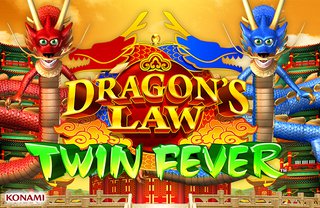
Dragon's Law Twin Fever
A video slot game that is an expanded version of the original Dragon’s Law video slot game. Twin Fever features a mystical dragon theme with approximately 96% and medium volatility, as well as a complement of bonus features such as free spins and stacked symbols.

Lotus Land
An Asian-inspired video slot game that uses traditional reel mechanics to produce an RTP of approximately 96% and medium volatility, along with bonus symbols tied to free spin bonus multipliers.

Jumpin' Jalapeños
A video slot game that features a Mexican theme, Jumpin’ Jalapeños video slots can also be found in many progressive versions. They offer wild symbols, bonus rounds, and have a medium level of volatility.
Progressive Jackpot Titles
Konami has many different types of progressive jackpot slot machines. The jackpot prize amount grows as players continue to place bets on these types of games. A network progressive jackpot is when multiple slot machines and/or casinos can contribute to the same jackpot network, and as a result, the prize amount increases dramatically. On the other hand, a standalone progressive jackpot is tied to one machine or instance of a game.
The amount paid out to the winner will vary, based on the jackpot’s network size and the amount of money wagered by each person playing in the network.
Progressive jackpots can reach large payout levels depending on the network size and bet structure.
Other Casino Games
Konami’s main focus is slot machines and casino management systems rather than a full portfolio of online casino products. The company is best known for land-based slot cabinets and digital slot titles deployed in regulated casinos worldwide.
Konami is not involved with producing large quantities of live dealer, crash, or bingo games, as many other online game development companies are. Instead, the technology platform for Konami’s game development environment focuses on casino slot machines and integrated casino systems (SYNKROS) that provide operators with support to manage loyalty programs, track player activity, and analyze data from the gaming floor.
Where to Play Konami Games
You can play online slots legally in Connecticut, Delaware, Michigan, New Jersey, Pennsylvania, Rhode Island, and West Virginia. These seven states allow regulated online casinos to offer real‑money slot games.
Konami slots are not available in every legal state, but they are present in several verified markets. Konami is confirmed as available at New Jersey online casinos, where it has the longest‑standing U.S. presence. Through its expanded partnership with Caesars Digital, Konami’s online slot catalog is also accessible in West Virginia, New Jersey, and has expanded into Michigan and Pennsylvania.
Some Konami titles—such as China Shores—also appear on regulated social or sweepstakes platforms, which may allow play in additional states depending on platform rules.
100% of Losses Back up to $500 Plus 500 Lion Link Bonus Spins
ONLY 1x Play Through on Bonus Money!
Licensed casinos featuring Konami
The best online casinos in the U.S. host hundreds of slots from Konami where you play iconic slots like China Shores and China Mystery
RTP & Volatility Analysis
Konami slot math varies widely across titles and jurisdictions, so the details below summarize what players can generally expect in terms of RTP ranges, volatility, and win potential based on publicly available information.
Average RTP Range
Konami does not publish one portfolio-wide RTP figure, so published RTP data is usually available on a game-by-game basis and can vary by casino, jurisdiction, and mathematical configuration. In general, many Konami slots commonly listed online sit around the 96.0% to 96.2% range. For example, public game pages list titles such as China Mystery at 96.08% and Jumpin’ Jalapeños at about 96.03% in some configurations.
That said, RTP can differ quite a lot depending on where the game is deployed. Regulatory approval documents from the Australian Capital Territory show Konami-linked configurations with lower approved return settings, including roughly 88% to 95%+ ranges for certain Jumpin’ Jalapeños setups. This shows that the final payout structure may depend on the operator and local rules, not just the game title itself.
For a broader guide, see our Best Odds Games Guide.
High RTP Titles
Based on publicly available game pages, higher-RTP Konami titles include China Shores (96.1%), Jumpin’ Jalapenos (96.04%), Lotus Land (96.06%), Lion Festival (96.08%), and Dragon’s Law / Dragon’s Law Twin Fever (96.0%). These figures reflect each title’s payout structure, where published, but availability can differ by operator.
Volatility Profile
Konami’s lineup covers a mix of variance levels, though many of its better-known titles sit in the medium to high volatility range. Officially, China Shores is marked as high volatility on Konami’s site, while public game databases list Dragon’s Law as medium volatility and Jumpin’ Jalapenos as medium volatility. In practical terms, lower variance suits players who want steadier small-to-mid payouts, while higher variance is better for players comfortable with longer dry spells in exchange for bigger upside.
Maximum Win Potential
Publicly available real-game data for older Konami online titles points to more modest maximum win potential than many modern high-volatility slots. China Shores is commonly listed with a max win of 1,000x stake, and Dragon’s Law is also listed at 1,000x on public game pages. That suggests Konami’s classic titles are generally more focused on traditional bonus features and recognizable cabinet gameplay than on extreme headline max-win mechanics.
Software Technology & Platform Integration
Konami’s online delivery stack is built around its owned Remote Gaming Server (RGS), which functions as the company’s main integration framework for distributing slot content to operator platforms. Konami states that this RGS integrates with “most popular back-end systems” used by online gaming operators, which points to a platform architecture designed for broad operator connectivity rather than closed distribution.
For front-end delivery, Konami publicly confirms robust HTML5 delivery for its iGaming portfolio. That supports cross-device compatibility across smartphones, tablets, and desktop devices, allowing the same game content to run across multiple screen types without requiring separate native builds. Konami has repeated this HTML5 positioning across its iGaming pages and product announcements.
On the operator side, the company’s wider technology messaging emphasizes advanced system architecture, high availability, and reliability through products such as SYNKROS, suggesting a focus on software scalability and stable long-term deployment. Public materials do not provide detailed consumer-facing API documentation, but they do consistently describe an operator-ready architecture built for integration and performance.
For a broader overview of casino software platforms, see our Software Guide.
How Konami Compares to Other Providers
Konami vs IGT
Konami has a more focused approach than IGT with regard to its product offering. While IGT has many more products that fall into the casino and online sports gaming categories, the bulk of the Konami product offering today consists primarily of video slot games and casino systems. While IGT is attempting to enter these markets through its PlayDigital brand as a broad, omni-channel digital casino and sports offering, Konami’s current focus is on getting its land-based slot machine content out to players via its RG Server.
When it comes to the math of the games themselves, Konami’s better-known products will generally be in the range of 96% RTP, while IGT’s more prominent products (like Cleopatra) are generally around 95.7% RT with medium volatility. In general, you will find that Konami’s products feel more traditional than IGT’s products, just like you will find that Konami has a more focused approach than IGT to digital products offered from their casino and sports verticals.
Konami vs Aristocrat
With Aristocrat, Konami once again takes on a more specialized role. Aristocrat states that they provide end-to-end solutions to over 300 jurisdictions and, through Aristocrat Interactive, are increasing their footprint in the online real money gaming market. Conversely, Konami has positioned itself mainly as an online company based on a limited number of land-based conversions.
From the player’s standpoint, Aristocrat is typically associated with having a wider array of portfolio and more premium branded content than Konami, which is better known for a narrower range of well-known cabinet titles such as China Shores (which it refers to as high volatility). So Konami is a better fit for players who prefer traditional reel-style games, while Aristocrat typically has more variety when it comes to themes and formats.
Konami vs Light & Wonder
Compared with Light & Wonder, Konami has a much tighter specialization in slots and casino systems. Light & Wonder’s iGaming business highlights a wider studio mix and broader product scope, including content from multiple studios plus table-game offerings, whereas Konami’s public online materials are much more slot-focused.
In terms of RTP and volatility style, Konami’s public-facing titles often land in the medium-to-high volatility range, with games like China Shores explicitly marked as high volatility. Light & Wonder’s big advantage is portfolio depth and cross-studio variety; Konami’s advantage is a more concentrated library built around long-running land-based themes.
Advantages & Limitations
Konami offers several strengths as a long‑established slot and gaming‑system supplier, though its online catalog also comes with certain limitations players should be aware of:
Advantages
- Konami holds a leading position due to its long‑standing focus on slot development and casino gaming systems.
- Its game library features well‑known titles with established themes across regulated markets.
- Distribution is strong in compliance‑driven jurisdictions with consistent continuation of popular land‑based franchises.
- Konami’s reach extends across most of the regulated online marketplace.
- Its technology ecosystem was designed for seamless integration with casino operators.
Limitations
- Konami’s online portfolio is narrower than that of larger multi‑vertical suppliers.
- The company is not widely associated with live dealer titles, crash games, bingo, or a large table‑game catalog.
- RTP details are not centralized, requiring players to rely on individual game or casino pages.
- Game availability, RTP settings, and feature configurations may vary by jurisdiction.
- Differences in operator setup and approved mathematical models can affect how individual Konami titles perform across markets.
Our Evaluation Methodology
We assess gaming providers using a structured evaluation framework built around product scope, regulatory footprint, game fairness information, RTP disclosures, volatility profile, platform integration, and market availability. Our review process combines official provider materials, regulatory announcements, approved market documents, and third-party game data where relevant.
We compare official company statements with regulatory records and only include game details such as RTP, volatility, or certification where there is credible support. This helps ensure fact-checked content that is useful, transparent, and consistent with editorial review standards. Bonus.com’s editorial guidelines state that its content is researched, reviewed, and fact-checked, with corrections issued when needed. See Bonus.com’s editorial policy and editorial guidelines for the full standards.
