





 Share
Share 



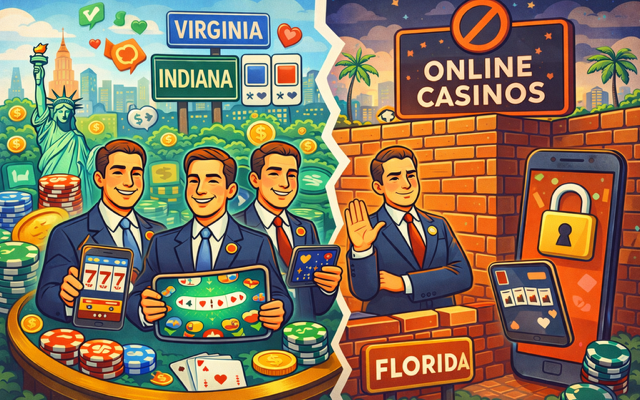
Just a week into the new year, and the race for online casino revenue is already heating up across the country. In the Northeast and the Heartland we have the “Revenue Seekers,” who are ready to turn every smartphone into a portable slot machine. On the other side you have the “Digital Ghosters,” who are trying to build a giant wall around the app store.
New York: The Empire State’s Billion Dollar Bet
Senator Joseph Addabbo is back at it again, and he is treating the New York State budget like a high-stakes poker game. On January 7, he introduced Senate Bill 2614, which aims to legalize online slots and poker. The plan is to let commercial casinos, video lottery facilities, tribal casinos, and existing mobile sports betting operators get in on the action.
The bill is surprisingly detailed. It asks for a $2 million per iGaming operator and $10 million per platform provider fee and insists the servers must stay housed at licensed New York gaming facilities. The state is looking for a big payday with a 30.5% tax rate on net revenue to fund education.
New York is about to double down on its bubbliness, because this is coming after it finally handed out the “Big Three” downstate casino licenses in late December 2025.
Virginia Joins the Online Poker Table
Further south Delegate Marcus Simon is making moves with House Bill 161. Virginia already has a successful sports betting market, but this new bill would officially authorize the Virginia Lottery Board to regulate full-scale internet gaming. Simon wants to give casino operators the ability to offer up to three different online platforms, which would give players plenty of options to choose from.
Licensees have to pay $500,000 initially, and each individual skin costs $2 million. That’s not all, as the bill proposes a 15% tax rate on gross gaming revenue, with a chunk of that money going toward problem gambling treatment. There is also a special “hold harmless” fund designed to protect existing interests during the transition. If this passes, Virginia could quickly become one of the most competitive markets on the East Coast.
Indiana Looks at iLottery and Online Casino Side by Side
Meanwhile, Indiana is finally getting back on the horse after a rocky 2025. The talk of the town in the Heartland is a dual move to legalize both an iLottery and online casinos in 2026. Lawmakers there are tired of watching tax dollars cross the border into Michigan, and they are prepping a serious legislative push to keep that money at home. They are betting that Hoosiers are ready to trade their paper scratchers for digital ones.
This push for digital gaming is happening alongside bigger conversations about relocating casino licenses to major hubs like Indianapolis or Fort Wayne. It seems Indiana is ready to expand its footprint both on the ground and in the cloud.
Massachusetts and Florida are the Party Poopers
While some states are pushing forward, Massachusetts is pressing pause. Representative David Muradian’s H4431 proposal is being intentionally delayed because officials are terrified that online slots will cannibalize the state’s very successful lottery revenue. It is a classic case of protectionism where the old guard is not quite ready for the new tech to take over.
Then we have Florida, where Senator Clay Yarborough is going in the opposite direction. On January 6, 2026, he filed Senate Bill 1164, which would actually prohibit internet gambling and sports wagering statewide. Instead of expanding, the bill is focused on tightening regulatory control and making sure the state has total authority over all gaming activity. Florida wants to protect its existing tribal compacts and keep the digital space heavily restricted.
Why Your Zip Code Is the Ultimate Wild Card
By the end of this year your GPS might be the ultimate wild card. While places like New York and Virginia are busy building digital floorboards, others are literally trying to unplug the entire machine. So whether you are about to go all in or just fold your phone and walk away depends entirely on which side of the state line you call home. The dice are officially in the air, and we are about to see if 2026 is the year the house finally moves to your living room.
