


To Top

What Are Pari-Mutuel Powered Games? Legal Alternative To Sweepstakes Casinos

Pari-mutuel powered games offer a refreshing alternative to traditional gambling by shifting the competition away from the house and directly toward other players. Unlike standard online casinos where you play against fixed odds or an “RNG” dealer designed to favor the house, pari-mutuel systems pool all wagers together and redistribute the total—minus a small management fee—to the winners. Here’s a look at some of the best PPG platforms on the market.

Up to $250 In Credit
  • 100% Credit Purchase Match up to $250

  • Tournaments, Challenges, and Showdowns

  • Now Accepting PayPal as a Payment Method

  • 21+. Please Play Responsibly. Eligible States Only.

  • To Claim: Click Play Now

  • 100% Credit Purchase Match up to $250

  • Tournaments, Challenges, and Showdowns

  • Now Accepting PayPal as a Payment Method

  • 21+. Please Play Responsibly. Eligible States Only.

  • To Claim: Click Play Now

150% Bonus On First Purchase
  • Get $25 in Cash for $10 Deposit

  • Daily Dash - Complete Dayly Missions, Earn Credits, Win Real Prizes

  • Use Bonus Code: BONUSCOM

  • Get $25 in Cash for $10 Deposit

  • Daily Dash - Complete Dayly Missions, Earn Credits, Win Real Prizes

  • Use Bonus Code: BONUSCOM


Online casino-style entertainment has expanded far beyond traditional slots and table games. In markets where full iGaming remains restricted or outright illegal, new formats have emerged to meet demand without directly violating gambling statutes. One of the most important, and most misunderstood, of these formats is the pari-mutuel powered game (PPG).

Pari‑mutuel‑powered games (PPGs) are a modern digital format built on the long‑established mechanics of pari‑mutuel wagering. While they may resemble casino games on the surface, they are structurally and legally distinct. Their operation depends entirely on regulated racing pools and advance‑deposit wagering (ADW) systems. These are systems that predate online casino gaming by more than a century.

This overview explains how PPGs function, why they hold unique legal status, how they differ from online casino and sweepstakes models, and why their popularity has grown in states where traditional iGaming remains prohibited.

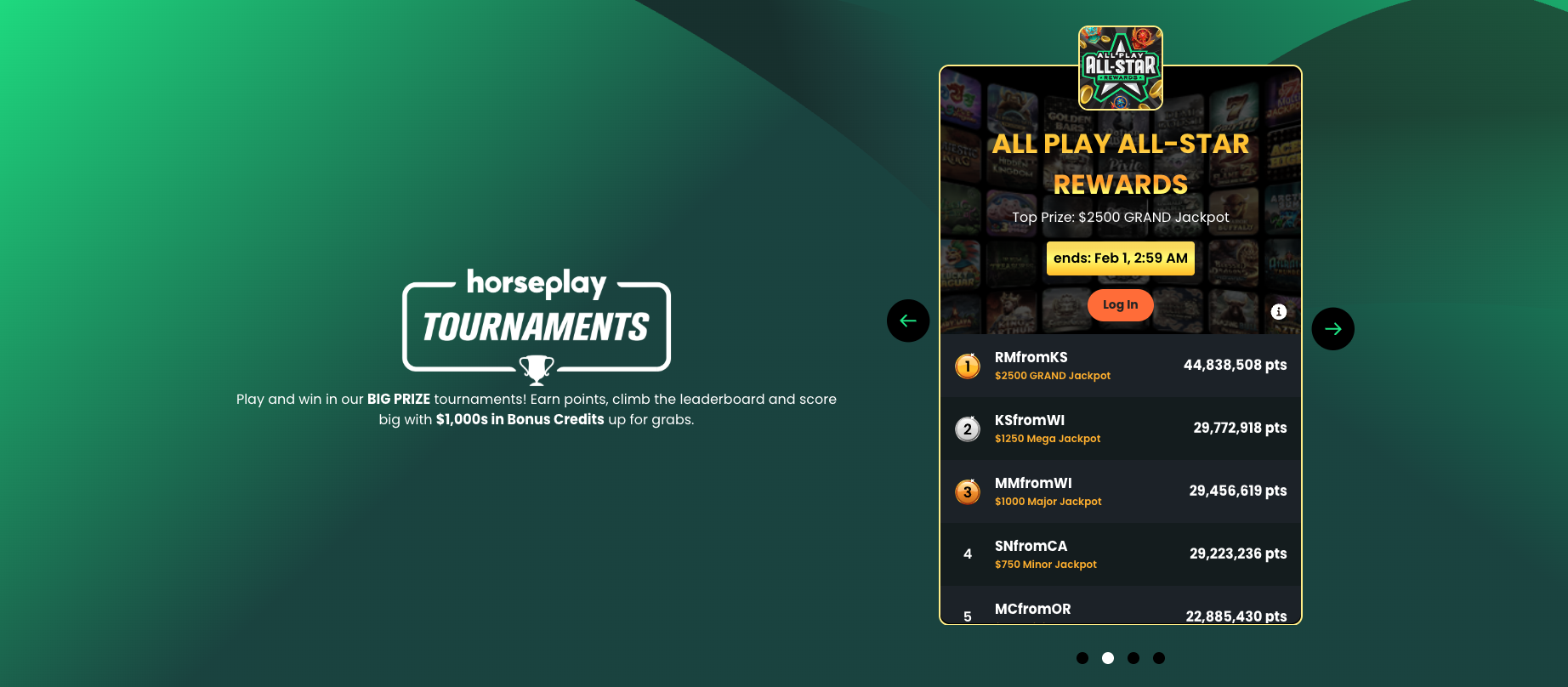
Horseplay Racing Tournaments

What Makes Pari‑Mutuel Betting Different

At the heart of every pari-mutuel system is a defining principle: players wager against one another, not against an operator.

In a traditional online casino, every spin, hand, or roll is a wager against the house. The operator sets the rules, embeds a mathematical edge, and assumes outcome risk. Over time, that edge ensures profitability. When you lose at a casino game, the house keeps your money. When you win, the house pays you from its reserves. The operator is always on the opposite side of your bet.

Pari-mutuel wagering operates differently, and understanding this difference is essential to explaining why PPGs are legal products in restricted markets.

All wagers of a specific type are placed into a shared pool. After the event settles, the operator deducts a fixed commission (known as the takeout), and the remaining pool is distributed to winning tickets based on each winner’s wager. The operator does not profit directly from player losses and has no financial interest in which outcome prevails. The operator’s revenue is the same: the predetermined commission percentage.

This strategy has been used for more than a hundred years in regulated betting markets such as horse racing, greyhound racing, jai alai, and others. It is one of the few kinds of gambling that is legal in places where casino-style gaming is not. This permission is grounded in history, culture, and structure, and stems from the fact that American gambling law has changed significantly over the last 150 years.

Pari-mutuel powered games simply wrap this century-old system in a modern digital interface. The wagers are real. The pools are real. The racing outcomes are real. What changes is how the player experiences the result.

Why Pari-Mutuel Betting Has Unique Legal Standing

Many states legally distinguish pari-mutuel wagering from casino gambling.

Historically, lawmakers viewed pari-mutuel betting as a regulated market-based system because operators take a fixed commission rather than profiting directly from player losses. As a result, many states permit horse racing and ADW wagering even when online casinos remain illegal.

That distinction still matters today. In many restricted states:

  • Online slots are prohibited
  • Online table games are prohibited
  • Licensed ADW wagering is permitted

PPGs operate under that existing pari-mutuel framework rather than through sweepstakes or promotional gaming laws.

What Pari-Mutuel Powered Actually Means

PPGs do not create new types of wagers. Instead, they provide a simplified, modern interface for placing real wagers into existing, regulated pari‑mutuel pools through a licensed ADW operator.

Behind the scenes:

  • Real races determine outcomes.
  • Real wagers enter regulated pools.
  • ADR rules and tote systems determine payouts.
  • The platform simply reveals those settled outcomes through an entertainment‑oriented interface.

The graphics may resemble a slot machine or scratcher, but the underlying bet is always tied to a real race.

You may also hear this category referred to as reveal gaming, particularly when focusing on the player experience.


What is Reveal Gaming?

You may also hear pari-mutuel powered games (PPG) referred to as “reveal gaming.” While the terms are often used interchangeably, reveal gaming focuses specifically on the player experience — where outcomes are pre-determined and revealed during play, rather than generated in real time like traditional RNG slots.

In reveal gaming, players typically select or activate a game element (such as a card, icon, or character), and the outcome is then uncovered through animations or step-by-step reveals. This format creates a sense of anticipation similar to scratch-offs or instant-win games, while still operating within the pari-mutuel framework where outcomes are pooled across players.

Platforms like HorsePlay are often positioned as reveal gaming platforms, emphasizing this interactive, outcome-reveal format. On the other hand, titles like Giddy Up are more commonly described as parimutuel powered games, highlighting the underlying wagering and pooling mechanics.

Ultimately, reveal gaming and PPG describe the same core category from different angles:

  • PPG = technical / regulatory framing
  • Reveal gaming = player-facing experience
GiddyUp Logo

Giddyup: Best For Mobile Players

GiddyUp launched publicly in March 2026 and has continued expanding its mobile-focused pari-mutuel gaming platform throughout the year. It’s bridging the gap between traditional horse racing and digital “Vegas-style” entertainment. Operating under an Advanced Deposit Wagering (ADW) framework, it offers a legal real-money alternative for players in states where standard online casinos are restricted. The platform is noted for its high-speed “reveal” mechanics and a focus on social, interactive gameplay.

At a Glance

  • Welcome Offer: 150% Bonus (Get $25 in Cash for $10 Deposit)
  • Payout Speed: 2–4 business days via ACH/Direct Deposit.
  • Platforms: iOS, Android, and Desktop.
  • Best For: Casual players who enjoy slots and bingo but want the transparency of regulated horse racing outcomes.

Key Highlights

  • Pure Pari-Mutuel Mechanics: Unlike social casinos, every win is tied to a verified race result regulated by the Oregon Racing Commission.
  • Wide Accessibility: Available in AK, AR, AZ, DC, GA, HI, IA, ID, IL, IN, KY, MA, MD, ME, MN, MO, MS, MT, NC, NH, NJ, NV, OH, OR, PA, SC, SD, TN, TX, UT, VA, VT, WA, WV, where traditional online slots are often unavailable.
  • Diverse Game Library: Features a mix of “Reel” games, Bingo, and “Crash” games, all using horse racing data to settle results instantly.
  • Secure & Regulated: Built on the AmWest ADW framework, ensuring full legal compliance and verified prize pool distributions.

Horseplay Racing: Best Welcome Bonus

Horseplay Racing stands out as the top pari-mutuel-powered platform in 2026. It combines sharp odds and a clean interface that works well for both beginners and experienced horse bettors. The platform is fully integrated with regulated racing pools and offers one of the strongest welcome incentives in the market.

At a Glance

  • Welcome offer: 100% Credit Purchase Match up to $250
  • Payout Speed: 3-5 business days
  • Platforms: iOS & Desktop
  • Best For: Best for slot fans in restricted states who want something that feels closer to regulated betting than social casinos

Key Highlights

  • 150+ games and good welcome bonus structure
  • Licensed racebook model provides legality and transparency
  • Horseplay launched in 2024 but operates through established ADW and wagering infrastructure with an operating history in regulated horse-racing technology since 2012.
  • Additional promos like Weekly “Get Back”, Weekend Bounce Back Bonus, and more.

How a Typical Pari-Mutuel Powered Game Works

Despite flashy interfaces that may resemble slot machines or scratch cards, most PPG platforms follow the same operational flow. Understanding this flow makes it clear why these products are classified as pari-mutuel wagering rather than casino gaming.

1

Funding an ADW Account

Players deposit funds using standard payment methods, including debit cards, credit cards, and bank transfers. This is not sweepstakes currency, virtual coins, or promotional tokens. It is real money entering a regulated wagering account governed by the same rules that apply to traditional ADW providers.

Identity and location checks are routine because the platform works as or through an ADW provider that is licensed by state racing commissions. Players may be required to provide their full legal name, address, date of birth, and the last four digits of their Social Security number. These rules aren’t made up; they’re part of the rules that are meant to stop underage gambling, money laundering, and fraud.

2

Purchasing Tickets

Players buy tickets instead of filling out a standard betting slip where they choose specific horses, bet types, and quantities. Every ticket stands for one or more real pari-mutuel bets that will be put into live racing pools.

The actual structure changes from platform to platform. Some tickets are for one bet on a single race. Other groups group together many bets on different races, which spreads the total cost of the ticket across different events and pool kinds. For speed and ease, selection is often done automatically, and this is on purpose. PPG platforms are for people who don’t want to research prior results, handicap races, or make complicated betting decisions. The idea is to keep the basic betting structure of conventional racing while making it less complicated.

3

Wagers Enter Live Racing Pools

Once purchased, ticket wagers are routed into live pari-mutuel pools tied to real races happening at tracks across the country. If no race is immediately available because of scheduling gaps between post times, the platform queues the wager until a race opens and the wager can be placed.

At this point, the outcome is already locked to real-world events. Your ticket is no longer hypothetical; it is a live wager in a regulated pool alongside other bettors. The platform cannot change the outcome, manipulate the result, or adjust payouts after the fact. The wager is in the pool, and the pool will settle based on what happens in the race.

4

Settlement Happens First

The races run. Horses cross the finish line. Official results are posted. Pools settle. Payouts are calculated according to standard pari-mutuel formulas.

Before the player presses any button, clicks any reveal, or triggers any animation, the final dollar amount, win or loss, already exists. This is the most important concept to understand about pari-mutuel-powered games. The outcome is determined before you interact with the interface, not as a result of that interaction.

5

The Result Is Revealed

The platform then displays that settled result through an interactive animation. Pressing “play,” “spin,” or “reveal” does not create the outcome. It reveals it. The way the visuals work is very different from how a slot machine or scratch card game works. When you press the button, you are not placing a bet. You are showing the outcomes of bets that have already been paid out.

This difference is quite important for both legal and practical reasons. This is why regulators treat PPGs differently from casino games, and why players should understand what they are actually doing when using these platforms.

Example of Money Flow

To make this concrete, consider a straightforward scenario that illustrates how money flows through a pari-mutuel powered game from start to finish.

Player Funds ADW Account

Buys Ticket (auto-selected real wagers)

A player buys a $25 ticket bundle.

Wagers Enter Live Racing Pools

The platform allocates that $25 into several live racing pools.

Races Run → Official Results Posted

After the races conclude, the combined payout for that set of wagers totals $60.

Pools Settle → Final Payout Calculated

PPG Interface Reveals Pre-Determined Result

When the player hits “reveal,” the game shows animations that add up to exactly $60—no more, no less.

The entertainment layer is separate from the wagering outcome, which is already fixed.


Pool-Based Risk vs. House Risk

This is where pari-mutuel-powered games fundamentally diverge from casinos, and why the economic structure matters for understanding legality and the player experience.

Casino ModelPari-Mutuel Model
Operator sets odds or RTPOperator takes a fixed commission
Operator carries riskPlayers fund the pool
Profit comes from a statistical edgePlayers pay winners
Player losses fund wins, and profitsOperator outcome risk is zero

Even though the interface may resemble a slot machine, the economics are fundamentally different. In a casino, the operator wants players to lose more often than they win because the operator’s profit is tied to net player losses. In a pari-mutuel system, the operator has no preference about who wins because its revenue is fixed as a percentage of the total pool regardless of outcome distribution.

Why PPG Is Not Sweepstakes Gaming

Sweepstakes casinos operate through:

  • Dual‑currency systems
  • Free alternative methods of entry
  • Promotional prize structures
  • Non‑wager‑based legal frameworks

PPGs do not use these mechanics. They involve direct real‑money wagering and rely on racing statutes—not sweepstakes law—for authorization.

Regulatory Oversight: Advance Deposit Wagering

Advance deposit wagering is one of the most heavily regulated betting formats in the United States. The regulatory framework was built over decades to ensure integrity, prevent fraud, and protect consumers.

Oversight typically includes:

  • State racing commissions
  • Licensing requirements
  • Pool auditing
  • Identity verification
  • Anti-money laundering controls

This is why their legal footing is much stronger than platforms built on promotional loopholes or ambiguous interpretations of sweepstakes law. PPG operators are not operating in a gray area. They are licensed, regulated, and subject to ongoing oversight by state racing authorities.

For players, this means several practical safeguards. Funds are held in regulated accounts. Wagering activity is auditable. Disputes can be escalated to state regulators. There is a clear enforcement mechanism if something goes wrong.

California as a Case Study

California illustrates why PPGs matter.

The state:

  • ❌ Does not allow online casinos
  • ❌ Does not authorize iGaming
  • ✅ Does allow licensed ADW wagering

As sweepstakes platforms face increased enforcement pressure, pari-mutuel powered games stand out as one of the few clearly regulated online alternatives available to California residents.

The key requirement is simple: the platform must operate under proper ADW authorization and be verifiable through racing regulators.

PPG vs. Historical Horse Racing (HHR)

Pari-mutuel powered games are often confused with historical horse racing, and the confusion is understandable given the similar marketing language and visual presentation. However, they are not the same product, and the differences matter legally.

FeaturePari-Mutuel Powered Games (PPG)Historical Horse Racing (HHR)
Source of racesLive, real-time horse racesArchived, previously run races
How outcomes are determinedBased on current race results as they happenOutcome already exists in historical records
Wagering structureTrue pari-mutuel pools with players wagering against each otherPari-mutuel calculations applied to past events
Platform formatOnline, through licensed advance deposit wagering (ADW) systemsMost commonly, physical terminals or machines
Player interactionTicket-based or guided interface with post-settlement revealsMachine-style interface tied to historical data
Regulatory treatmentOperates under established ADW and racing commission oversightAuthorization varies widely by state and is often restricted
Legal clarityClearly tied to regulated live wagering frameworksFrequently contested due to a slot-like presentation
Typical availabilityStates that permit ADW wageringOnly in states that explicitly authorize HHR devices

This difference matters legally because many states treat these formats differently. California, for example, does not currently authorize HHR-style wagering terminals, and proposals to introduce them have faced strong opposition tied to tribal exclusivity concerns around slot-style gaming. If a platform claims to offer “online historical racing” to California residents without clear ADW licensing, it warrants serious scrutiny.

Why Operators Use Automated Selections

Traditional horse race betting can be complex for casual users because it requires handicapping knowledge and race analysis.

PPGs simplify that process by automatically generating wagers behind the scenes. This allows players to experience pari-mutuel betting without researching horses, odds, or race conditions manually.

While selection is automated, the underlying wagers still enter real pari-mutuel racing pools.

Who Pari-Mutuel Powered Games Are For

PPGs are not designed for everyone, and understanding the target audience helps set appropriate expectations.

  • Players who want legal online wagering options in restricted states
  • Users who prefer guided experiences over handicapping
  • Casual entertainment‑oriented players
  • Skilled bettors who want control over every selection
  • Users seeking fixed‑odds casino games
  • Players who expect consistent returns on identical wagers

Variability and Payout Structure of Pari-Mutuel Powered Games

Because payouts depend on pool distribution:

  • Returns are not fixed
  • Two identical tickets may pay differently at different times
  • Large pools can smooth volatility
  • Small pools can amplify it

Transparency and Fairness of Pari-Mutuel Powered Games

One advantage of pari-mutuel systems is transparency.

Results are tied to publicly run horse races and regulated wagering pools rather than privately controlled casino software. Because payouts are determined through pari-mutuel calculations, operators cannot adjust results after wagers enter the pool.

The operator’s revenue comes from a disclosed commission rather than a hidden house edge.

Why PPGs Are Expanding Now

Several trends contribute to PPG growth:

  • Increased scrutiny of gray‑area gaming models
  • Continued absence of online casino authorization in major states
  • A consumer shift toward familiar, game‑like interfaces
  • Regulator comfort with established ADW systems

PPGs combine regulatory clarity with user‑friendly presentation, making them an appealing option in non‑online casino states.

Final Take

Pari-mutuel powered games are not sweepstakes casinos or traditional online slots. They operate through licensed ADW systems that place real wagers into regulated racing pools.

While the presentation may resemble casino-style gaming, the underlying structure is fundamentally different: outcomes are determined by real races, payouts come from pooled wagers, and operators earn fixed commissions rather than profiting directly from player losses.

As scrutiny around gray-area gaming increases, PPGs are becoming one of the clearest regulated alternatives available in restricted online gambling states.

Pari-Mutuel Powered Games FAQ

Yes. Pari‑mutuel powered games are typically available in states that already permit parimutuel horse‑race wagering and ADW (Advance Deposit Wagering). Because PPG outcomes are tied to regulated racing pools—not RNG machines or sweepstakes structures—they follow the same rules governing online horse‑race betting.

Availability varies by jurisdiction, but PPGs most often launch in markets where ADW platforms are already licensed and operating.

No. Players wager against one another, not against the house, and real races determine outcomes.

All wagers enter a pari-mutuel pool, a fixed commission is taken, and winnings are distributed to successful bettors.

No. Results are based on live racing, not predetermined data.

The interface is modernized for accessibility, but the underlying wagering mechanics remain traditional.

Pari‑mutuel powered games are distinct from both skill‑based games and sweepstakes casinos.

  • Skill games determine outcomes based on player ability.
  • Sweepstakes casinos use promotional sweepstakes entries, not real pari‑mutuel wagering.
  • PPGs, by contrast, tie every outcome to a real parimutuel horse‑race betting pool, which gives them a different legal and operational foundation.
About the Author
VIEW ALL POSTS

Caleb Tallman is a sports betting, iGaming, and prediction markets expert for Bonus.com, covering the online gaming sector since 2019. His work has appeared in Legal Sports Report, Gaming Today, MLive, and more. With over 100 reviews under his belt, Caleb aims to bridge the gap between expert players and new users.

VIEW ALL POSTS
Want the Good Stuff? We’ve Got You. Get The Drop—Bonus.com’s sharp, weekly newsletter with the wildest gambling headlines actually worth your time. Plus, we’ll hit your inbox now and then with exclusive offers, big jackpots, and other things we’d hate for you to miss.
You are already subscribed to our newsletter. Want to update your preferences data?
Thank you for signing up! You’re all set to receive the latest reviews, expert advice, and exclusive offers straight to your inbox. Stay tuned!
View Offers
Something went wrong. Please try again later