


 Share
Share 



Bonus TL;DR
- Maricopa and Delaware counties banned election employees from trading on prediction market contracts tied to elections.
- Officials aim to prevent insider trading and protect election integrity amid broader scrutiny of these platforms.
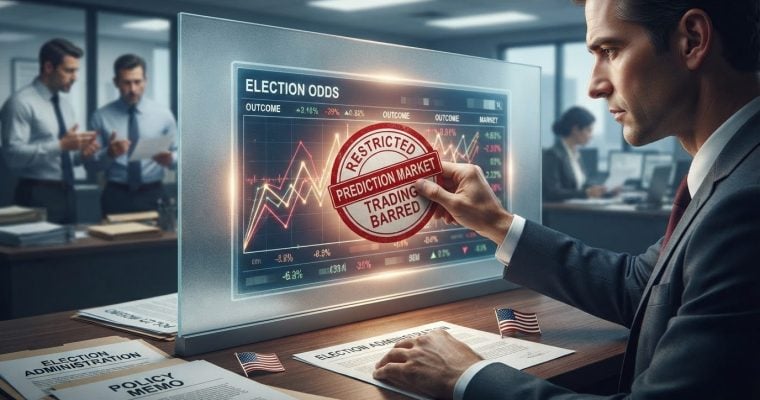
Maricopa County, Arizona, and Delaware County, Pennsylvania, have barred election-related employees from trading on prediction market contracts tied to elections ahead of the midterms.
The restrictions add to a broader push by public officials and major institutions to limit prediction market activity where nonpublic information or election administration is involved. County officials said the moves are meant to reduce insider-trading risk, protect confidence in election administration, and avoid confusion between market odds and polling.
In Maricopa County, a resolution adopted in July applies to roughly 13,000 county employees. The policy covers event contracts tied not only to elections, but also to other sensitive subjects including weather forecasts and court proceedings.
Arizona Gov. Katie Hobbs had already signed an executive order restricting state employees from using nonpublic information to trade on prediction markets.
In Delaware County, Pennsylvania, officials updated the employee oath to explicitly cover prediction market contracts, affecting about 2,200 workers. Delaware County elections director James Allen told Quartz the county concluded that prediction markets constitute gambling.
Officials say prediction markets can undermine trust in elections
Maricopa County Supervisor Thomas Galvin said the policy was designed to show the county is taking both election transparency and newer forms of trading seriously.
“When we implement a policy for our employees not to trade or bet on non-public information, that goes a long way towards showing people that not only are we working hard to maintain transparent elections, but also shows that we are being very aware of new technology,” Galvin said.
Allen was more blunt about Delaware County’s reasoning, telling Quartz: “I don’t want these prediction markets to infect our elections here in Delaware County.” He also called them “the newest and most existential threat to undermining faith in the elections.”
Officials also said voters can mistake prediction market prices for polling data. Galvin said, “Just because someone has a 98% chance of winning on a prediction market doesn’t mean that they’re winning in the polls 98 to 2.”
Scrutiny spreads beyond local election offices
The county actions come as prediction markets such as Kalshi and Polymarket face wider scrutiny from government officials and employers.
Quartz reported that in July, Maryland’s elections administrator asked the state prosecutor to investigate whether election-linked prediction market contracts violate a state law banning wagers on election outcomes. Neither Kalshi nor Polymarket answered the outlet’s questions about direct engagement with election officials on the issue, though a Polymarket spokesperson said states lack legal jurisdiction to regulate prediction markets.
The story also noted similar restrictions elsewhere. Goldman Sachs updated its personal trading policy to bar employees from wagering on prediction market contracts involving electoral outcomes, financial market performance, and other sensitive topics. The White House has also warned staff against using nonpublic government information to place bets on prediction markets.
What comes next is less clear. The source did not say whether Maryland’s request led to any further action, and it remains unanswered how state and local officials may try to regulate election-related prediction contracts going forward.
Source: As reported by qz.com.