
 Share
Share 



Bonus TL;DR
- Kalshi has introduced a suite of new platform transparency measures—including Brier scores for forecast accuracy, real-time trade displays, and low-volume market indicators—in an effort to bolster market integrity ahead of the U.S. midterm elections.
- The features launch as the prediction market sector faces mounting scrutiny from Congress and state regulators, with industry watchers noting that while the platform’s safeguards and recent internal enforcement actions are positive first steps, robust regulatory oversight is still necessary to monitor trading activity and prevent insider manipulation.
Kalshi said Tuesday it is adding new transparency measures to its election markets ahead of the upcoming midterms, as prediction platforms head into what the company’s critics and supporters alike see as their first major U.S. election stress test.
The move matters because election markets are now more widely available to the public than in past cycles, bringing heavier scrutiny from Congress, election officials, and regulators over how these products are monitored and whether existing rules are sufficient. Concerns highlighted in the latest coverage include insider trading, disinformation, possible conflicts with state gambling laws, and the broader effect of election wagering on campaigns and polarized politics.
Kalshi rolls out Brier score, trade display, and low-volume alerts
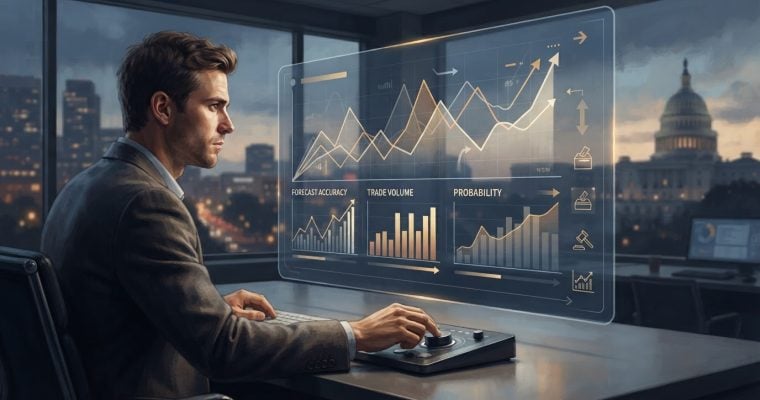
According to the report, Kalshi’s new measures include a Brier score to show forecast accuracy, indicators for low-volume markets, and a real-time display of individual trades.
Kalshi CEO and co-founder Tarek Mansour said the changes are intended to help users understand how market probabilities are formed and how prices move over time.
“People are turning to prediction markets because they offer something traditional forecasts can’t: a bottom-up signal built from the collective judgment of everyone participating,” Mansour said.
He added: “Through Kalshi markets, millions of people compete on an open exchange that incentivizes participants to think rationally, conduct research, and put conviction behind well-informed opinions. The result is trustworthy, accurate information, and there is no topic more critical for accurate information than elections.”
The article also notes increased election-market activity this year across platforms including Kalshi and Polymarket.
Oversight questions remain ahead of the midterms
Even with the added transparency tools, questions remain about how election markets will be supervised as trading volume grows.
Former DraftKings operations official and current American University sports management director Matthew Bakowicz told the outlet he viewed Kalshi’s safeguards as a useful first step, but said enforcement capacity still matters.
“Those are safeguards that I’m impressed with, and I think are going to be at least a starting point of where we should be at with these kind of markets,” Bakowicz said. “But again, you then have to have an agency that has the ability to monitor this, investigate everything, and of course bring people to justice or flag things that look inappropriate.”
The report says Congress is weighing whether prediction markets need additional regulation. It also says local and state election officials are examining whether some products could evade gambling restrictions in certain jurisdictions.
Reliability is another issue hanging over the sector. The article cites a Wisconsin Democratic primary for governor in which state Rep. Francesca Hong was favored at about 95% on a market before losing to David Crowley.
Kalshi has also already taken some enforcement action on its own platform, according to the report. It suspended a handful of candidates in low-profile races for betting on their own candidacies and issued small fines. The article also says a former White House teleprompter operator was ordered to return profits from bets involving Donald Trump speech wording, while former Rep. George Santos was penalized over trades tied to whether he would attend the State of the Union.
What to watch next
The immediate test is the midterm election cycle, which the report describes as the first major one in which public-facing prediction markets are widely available. For operators, regulators, and traders, the next question is whether added transparency can address integrity concerns before lawmakers or agencies move toward tougher oversight.
Source: As reported by AUSTIN DENEAN.