





 Share
Share 



Bonus TL;DR
- Wabanaki tribal leaders recently warned federal regulators that unregulated event contracts threaten state and tribal sports wagering compacts.
- The leaders argued that these platforms bypass local revenue structures, undermining exclusive mobile betting rights granted under state law.
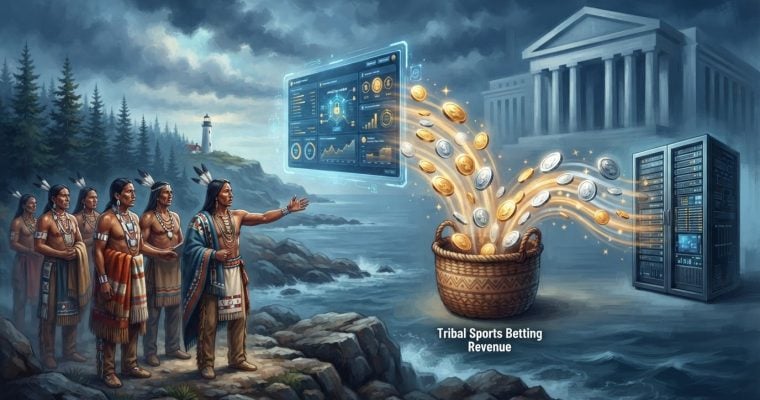
The Wabanaki Nations are warning that federally regulated prediction markets could undermine Maine’s tribal sports betting framework by diverting revenue and weakening state and tribal control over gaming.
The dispute matters in Maine because the state’s 2022 sports betting law gave the tribes exclusive rights to mobile sports betting, creating partnerships with Caesars Sportsbook and DraftKings that include revenue-sharing agreements. Tribal leaders and Maine officials now argue that platforms such as Kalshi and Polymarket offer products that look similar to gambling while operating outside the state system.
Chief Kirk Francis of the Penobscot Nation told News Center Maine, “This is a huge threat to Maine state revenue, to tribal revenue,” adding, “I’m extremely worried about it.”
Tribes say event contracts look like gambling
Maine law defines gambling as staking something of value on the outcome of a contest of chance or a future uncertain event outside a person’s control. That definition is central to the tribes’ argument that prediction markets should not bypass state and tribal oversight.
Corey Hinton, a lawyer for the Passamaquoddy Nation, said prediction markets may override decisions made by Maine and by tribal governments. “How is this not just gambling?” Hinton said. “It looks and it feels like it’s activities based on the same exact thing.”
Wabanaki leadership sent a letter to the CFTC in July asking the agency to “stop taking actions that attempt to make it easier for prediction markets to engage in gaming activities that harm Indian country.”
The revenue concern is not theoretical for Maine. The Maine Gambling Control Unit said the state’s 2026 sports betting revenue was nearly $4 million as of July, up from the same point last year.
Federal regulators and operators argue the products are different
The Commodity Futures Trading Commission treats U.S. prediction market platforms as financial exchanges, not gambling operators. A CFTC spokesperson said event contracts are federally regulated swaps and that CFTC rules preempt state gambling laws.
That federal view is now colliding with state regulators. Maine Attorney General Aaron Frey joined a bipartisan coalition of 37 states in an amicus brief backing a Massachusetts lawsuit against Kalshi.
Governor Janet Mills’ office also said the administration is concerned that weak oversight of prediction markets could undermine Maine’s regulated sports betting market and the law that entrusted it to the Wabanaki Nations.
Kalshi disputed the comparison to sportsbooks, saying, “There are fundamental differences between sportsbooks and prediction markets,” and describing its platform as a federally regulated financial exchange. The company also said it complies with corporate tax laws and supports state taxation. Polymarket did not respond to the outlet’s request for comment.
What comes next
The legal fight over prediction markets is still moving through courts and regulators, with Maine officials watching for broader consequences for tribal gaming rights and state authority. According to the report, the issue could reach the Supreme Court later this fall.
For now, the main unanswered question is whether courts and regulators will continue to treat event contracts as federally protected financial products or allow states greater authority to classify them as gambling.
Source: As reported by newscentermaine.com.


