




 Share
Share 



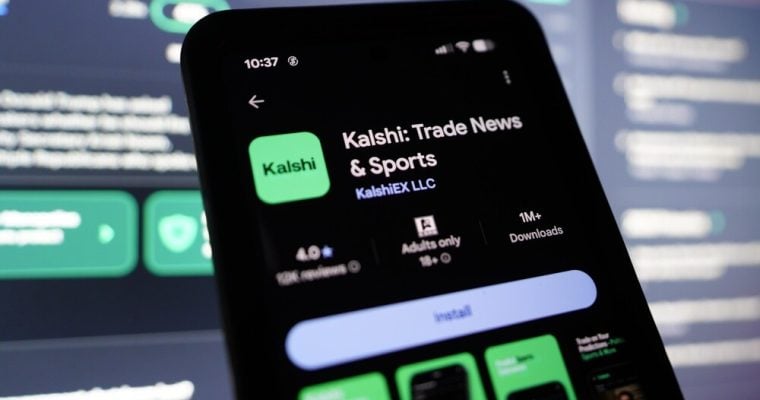
It has recently emerged that the Ohio Casino Control Commission has not been a member of the National Council on Problem Gambling (NCPG) for quite some time now. The regulator withdrew its membership from the organization back in June over the NCPG’s partnership with prediction market operator Kalshi, making it the first to leave. However, its exit was quiet, only coming to light during a recent Massachusetts Gaming Commission meeting convened to discuss the state’s potential exit.
Ohio is now the third confirmed state to withdraw its membership from the NCPG over the latter’s ties to Kalshi. The Michigan Gaming Control Board (MGCB) left in July, while the Nevada Council on Problem Gambling (NCPG) exited in August.
Concerns over ties to Kalshi
OCCC Interim Executive Director Andromeda Morrison sent a letter to the NCPG in June announcing the state’s exit from the organization. “I regret this action is necessary but trust you will understand the Commission’s need to ensure that it is not associated with organizations that are affiliated with companies engaged in illegal gambling in Ohio,” the letter read.
In the letter, the OCCC also asked the NCPG to immediately remove all affiliation references. It also stated that none of its employees would serve on the NCPG board or attend any events, including the annual conference.
Notably, the OCCC is currently engaged in a legal battle with Kalshi. The regulator accuses the prediction market of operating unlicensed sports betting, evading the 20% gaming tax, ignoring local advertising standards, and allowing underage users below 21 to trade. The OCCC even slapped Kalshi with a fine of $5 million in April. However, Kalshi insists that it is under the exclusive jurisdiction of the Commodity Futures Trading Commission (CFTC), a federal agency.
Despite this much friction between prediction markets and state regulators, the NCPG brought on Kalshi as its first member of a newly created Financial Trading & Services category. Kalshi then pledged to invest $2 million over two years to help fund the Financial Trader Health and Safety Initiative, a gambling awareness and education program.
The OCCC accused the NCPG of trying to legitimize Kalshi. “Instead, it seeks to legitimize an illegal sportsbook operating in Ohio and undercut the Commission’s efforts to eliminate this source of unlicensed gambling. At a minimum, it creates consumer confusion as to whether this prediction market platform carries the same protection as licensed sportsbooks. It does not,” the letter read.
Third state confirmed to leave
Two other states have also withdrawn their membership from the NCPG over Kalshi. The Michigan Gaming Control Board left in July. Unlike Ohio, Michigan’s exit was loud. MGCB Executive Director Henry Williams even warned that the NCPG’s partnership with Kalshi risks fueling a gambling problem by presenting sports betting as a financial strategy.
“The notion that internet sports betting can and should be pursued as a viable means of financial gain or protection against financial loss undermines this position and increases the risk of irresponsible and problem gambling behavior,” Williams wrote in his letter.
The Nevada Council on Problem Gambling severed its ties with the NCGP in August. Executive Director Trey Delap said that the partnership with Kalshi would directly compromise the state’s local public health efforts.
Massachusetts also contemplating exit
Notably, the Massachusetts Gaming Commission (MGC) is also contemplating exiting the NCPG. However, Mark Vander Linden, director of research and responsible gaming, recommended that the state maintain its membership following a recent conversation with NCPG leader, noting that their missions were still aligned. All of the members agreed to maintain the membership, but only for the short term.
In contrast, Commissioner Nakisha Skinner was in favor of cutting ties but said that she didn’t want to be selective, as regulated betting operators in the state also have prediction market platforms. Commissioner Eileen O’Brien also expressed her concerns over the $2 million donation from Kalshi, noting the litigation against prediction markets. Moreover, she warned that the MGC may have to withdraw its membership “sooner rather than later.”
Chair Jordan Maynard also warned that the MGC would stand for its values. He said, “NCPG should be on notice that anything we do and anything we’re a part of, we’re going to stand for our values. We’re going to be who we are, and we’re not going to change just because somebody’s taking money from one of these prediction market companies. We’re going to hold their feet to the fire. I’m sure when our renewal comes up, we’re going to have another conversation.”


