



 Share
Share 



For generations, sports fans watched games for one reason: they cared about the team. Today, many viewers have another reason to stay glued to the action until the final whistle.
With legal sports betting now available across much of the United States, the relationship between fans and sports has evolved. Betting is no longer a niche activity discussed in Vegas sportsbooks. It’s integrated into broadcasts, highlighted in pregame shows, and embedded within countless sports apps.
But has sports betting actually changed how fans watch games?
The evidence suggests it has.
The Rise of the “Every Game Matters” Fan
Before widespread sports betting, most fans focused primarily on their favorite teams.
A New York Giants fan might watch every Giants game while paying little attention to a random matchup between the Cardinals and Seahawks.
Sports betting changes that equation.
Suddenly, fans have reasons to care about games that would have otherwise gone unnoticed.
A wager on the point spread, moneyline, or player props can instantly turn an ordinary matchup into must-watch television.
For many bettors, every game becomes relevant.
The increased engagement isn’t just anecdotal. An Ipsos survey found that 69% of sports bettors believe sports betting helps people become more engaged with sports, suggesting that wagering gives many fans additional reasons to follow games, players, and teams beyond their usual fandom.
Fans Are Watching Longer
One of the most noticeable impacts of sports betting is increased engagement throughout a game.
Historically, fans might stop watching if their team fell behind by three touchdowns or if the outcome seemed obvious.
Bettors often stick around.
A game that appears decided can still contain meaningful action:
- A player prop may still be in play.
- A team could cover the spread.
- An over/under total could hinge on a late score.
- A same-game parlay might depend on one final drive.
As a result, fans have more reasons to watch until the clock hits zero.
Player Props Have Shifted Attention Away From Teams
One of the biggest changes in sports viewing is the rise of player-based betting.
Instead of simply rooting for the Chiefs to win, bettors may also care about:
- Patrick Mahomes passing yards
- Travis Kelce receptions
- A running back scoring a touchdown
- A quarterback throwing over a certain number of completions
This changes how fans experience games.
Some viewers now find themselves following individual performances more closely than the final score.
In extreme cases, a bettor may celebrate a player reaching a statistical benchmark even while the player’s team loses.
The focus shifts from team loyalty to individual outcomes.
Fantasy Sports Paved the Way
Sports betting did not create this trend by itself. Daily fantasy sports helped prepare fans for a more data-driven viewing experience.
Fantasy participants learned to:
- Track individual statistics
- Follow multiple games simultaneously
- Monitor injuries and lineup changes
- Pay attention to players outside their favorite teams
Sports betting expanded on these habits.
What began with fantasy football has evolved into a sports culture where individual player performance can be just as important as team success.
More Screens, More Data, More Information
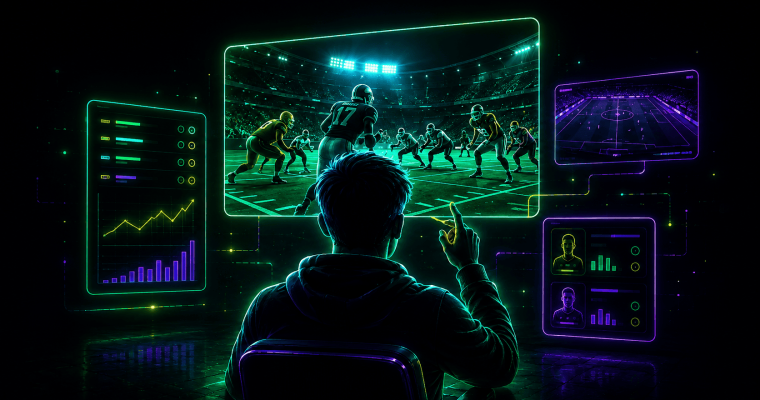
Modern sports fans rarely watch games with a single screen.
Many bettors follow games while simultaneously viewing:
- Live odds
- Betting apps
- Statistical dashboards
- Fantasy scores
- Social media reactions
The result is a more interactive viewing experience.
Instead of passively consuming a broadcast, bettors actively analyze information throughout the game.
A touchdown is no longer just a touchdown. It’s also a point-spread swing, a prop bet result, and potentially a parlay-changing event.
Broadcasters Have Adapted
Sports media has noticed these changes. Just a decade ago, networks rarely discussed point spreads or betting lines.
Today, betting references are common across major sports broadcasts.
Viewers frequently encounter:
- Odds analysis segments
- Betting-focused studio shows
- Sponsored sportsbook content
- Real-time betting discussions
- Betting experts appearing alongside traditional analysts
What was once treated as taboo has become part of mainstream sports coverage.
Broadcasters understand that a growing segment of the audience wants betting-related context.
Betting Can Increase Emotional Investment
One reason sports betting has become so popular is that it creates emotional stakes.
A fan may enjoy watching Sunday Night Football regardless of the matchup.
But placing a wager often intensifies the experience.
Every possession feels more important. Every turnover carries greater weight. Every field goal suddenly matters.
The outcome becomes personal.
That additional emotional investment helps explain why sports betting has become such a powerful engagement tool for leagues, broadcasters, and sportsbooks alike.
Not Every Change Has Been Positive
The impact of sports betting isn’t universally celebrated. Some critics argue that betting can shift attention away from the game itself.
Instead of appreciating athletic performances or team storylines, viewers may become overly focused on wagers and outcomes.
Others worry that constant exposure to odds, betting content, and promotional offers can make sports feel more transactional.
For some fans, watching a game purely for entertainment is becoming less common than it once was.
The debate reflects a broader question about modern sports culture: are fans following teams, or are they following bets?
Younger Fans Are Consuming Sports Differently
Sports betting has also influenced how younger audiences engage with sports content.
Many younger viewers consume games through:
- Highlight clips
- Social media posts
- Betting analysis videos
- Live streams
- Podcasts
Rather than watching a three-hour game from start to finish, they may follow key moments tied to their wagers. This creates a more fragmented but highly engaged viewing experience.
The game is no longer confined to the television broadcast. It exists across multiple platforms and communities simultaneously.
Sports Betting Content Has Created a New Type of Fan
Sports betting isn’t just changing how people watch games. It’s influencing the media they consume before, during, and after the action.
Millions of fans now follow betting podcasts, YouTube handicappers, social media analysts, and livestream personalities for picks, insights, and entertainment.
This trend mirrors a broader shift happening across gambling content, where audiences increasingly watch creators discuss or participate in gambling-related activities online.
In many ways, betting personalities have become the modern equivalent of sports radio hosts, helping shape fan conversations throughout the week.
Betting Can Increase Emotional Investment
Researchers and gambling experts have long studied how financial stakes can increase emotional attachment to outcomes. Similar dynamics help explain why celebrity endorsements and gambling partnerships can be so influential among consumers.
The growing presence of betting content has also fueled discussions around responsible gambling and consumer protection.
So, Has Sports Betting Changed Sports Fandom?
The short answer is yes.
Sports betting has transformed many fans from passive observers into active participants. It has encouraged viewers to watch more games, stay engaged longer, follow more teams, and pay closer attention to individual player performances.
At the same time, it has changed what many fans prioritize when they watch.
For some, rooting for a team remains the heart of the experience. For others, the excitement now comes from tracking bets, props, and parlays alongside the action on the field.
Final Thoughts
Sports betting hasn’t replaced traditional fandom, but it has undeniably reshaped it.
A fan can still cheer for their favorite team, celebrate championships, and live through the highs and lows of a season. The difference is that many viewers now have additional reasons to care about what happens during a game.
Whether that’s a positive evolution or a troubling shift depends largely on perspective.
What isn’t up for debate is that sports betting has become one of the most significant forces influencing how modern fans watch sports, and its impact is likely to continue growing as betting becomes even more integrated into the sports viewing experience.