
 Share
Share 


Sportsbooks are not exactly subtle about what they want you to bet.
Open any sports betting app ahead of a World Cup match, NFL Sunday game, NBA playoff game, or random Tuesday baseball slate, and the message is pretty clear: build a same-game parlay. Boost a same-game parlay. Tail this prebuilt same-game parlay. Add one more leg to make the payout bigger.
That is not an accident. Same-game parlays, or SGPs, have become one of the most important products in U.S. sports betting because they sit right at the intersection of what players like and what sportsbooks like even more. Bettors get a cheap lottery-ticket style wager tied to one game they already plan to watch. Sportsbooks get a high-engagement, high-margin product that can turn a $5 bet into 45 minutes of app checking, live sweating, and maybe another deposit.
In other words, sportsbooks care about same-game parlays because SGPs are fun, sticky, easy to market, and very good for the house.
What Is a Same-Game Parlay?
A regular parlay combines multiple bets into one ticket. Every leg has to win for the whole bet to cash.
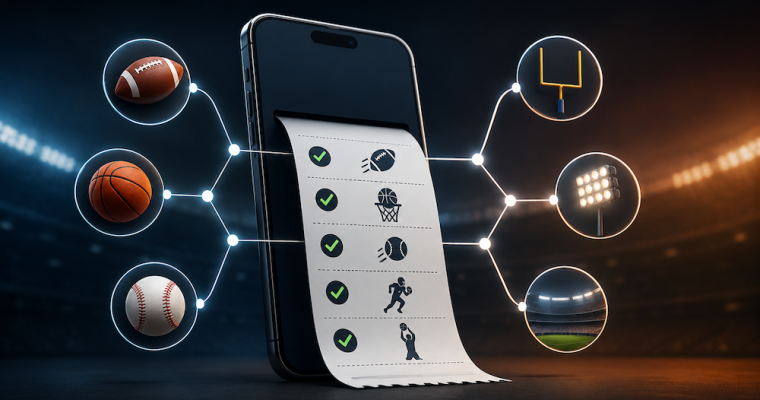
A same-game parlay does the same thing, but all the legs come from one game. For example:
- Eagles moneyline
- Jalen Hurts anytime touchdown
- A.J. Brown over receiving yards
- Game total over 47.5
That is one ticket built around one story: the Eagles win, Hurts scores, Brown gets involved, and the game goes over.
That storytelling element is a huge part of the appeal. A straight bet is “I think this team wins.” A same-game parlay is “I think I know exactly how this game is going to go.”
And that is where sportsbooks have found gold.
The Margins Are Better
This is the boring business answer, but it is the real answer: sportsbooks make more money on parlays than they do on standard straight bets.
A typical straight bet already has a built-in sportsbook edge. That is why you usually see point spreads and totals priced around -110 on both sides. You are not just picking winners; you are paying the book a price to make the bet.
With parlays, that edge compounds. Add more legs, and the ticket becomes harder to hit. Add correlated legs from the same game, and the pricing gets even more complicated. The sportsbook has to account for the relationship between those outcomes, but the player also has to beat a much more layered price.
That does not mean every same-game parlay is automatically a bad bet. It also does not mean every sportsbook price is perfect. But for the average casual bettor, SGPs are usually more expensive than they look.
That is the key. A same-game parlay can feel like a smart, customized bet. In reality, it is often a higher-hold product wrapped in a better user experience.
They Turn One Game Into a Full Betting Menu
Sportsbooks also love SGPs because they make every game feel bigger.
A random regular-season NBA game might not be interesting enough for most casual bettors to bet the spread. But give that same bettor a menu of player points, assists, rebounds, threes, double-doubles, team totals, alternate lines, and boosted combinations, and suddenly there are dozens of ways to get involved.
That matters because sportsbooks are not just competing over who has the best odds on Cowboys -3.5. They are competing over attention.
The more betting angles attached to a single game, the more time a user spends inside the app. The more time a user spends inside the app, the more likely they are to build a ticket, check cash-out values, browse boosts, or bet something live.
Same-game parlays turn a sportsbook from a place to make a pick into a place to build a mini fantasy script.
Prebuilt SGPs Make Betting Easier
Not everyone wants to dig through markets and build a ticket from scratch. Sportsbooks know that too.
That is why prebuilt same-game parlays are everywhere. You will see things like “Star QB Special,” “Primetime Boost,” “Big Man Double-Double,” or “Popular Parlay” sitting right on the home screen.
This solves a major problem for sportsbooks: decision fatigue.
A full betting menu can be overwhelming. There are spreads, totals, moneylines, props, alternates, live markets, futures, promos, and odds boosts. A prebuilt SGP turns all of that into one button. That does not make the bet better. It makes the bet easier to place. And for sportsbooks, easier is everything.
They Are Perfect for Promotions
Same-game parlays are also sports betting promo code machines. A sportsbook can offer a profit boost on a same-game parlay, a “bet $10, get $5” parlay promo, an insurance token if one leg loses, or a special boosted payout on a prebuilt ticket. These promos feel generous because the potential payout can look massive.
But the structure still favors the book. A 25% boost on a long-shot parlay can look exciting without necessarily turning it into a strong bet. Same thing with “one leg loses” insurance, which sounds amazing until you read the limits, qualifying odds, eligible markets, and bonus-bet restrictions.
That is why SGP promos are everywhere. They are flashy, easy to explain, and attractive to casual players, but they still push users toward a product sportsbooks already want them betting.
They Create Better Highlights for Marketing
Straight bets are not very viral.
Nobody is posting a screenshot that says, “I bet $110 to win $100 on an NBA total.” But a $5 same-game parlay that pays $1,200? That gets shared.
Sportsbooks understand the marketing value of big-looking wins. The bet might have been extremely unlikely to hit, but once it does, it becomes social content. The screenshot sells the dream better than any ad copy could.
That is part of the reason same-game parlays have become so visible. They fit perfectly into the modern sports betting content cycle: build the ticket, sweat the legs, post the near miss, post the bad beat, post the miracle hit.
Even losing tickets create engagement. In some ways, the “missed by one leg” parlay is almost as powerful as the winning one, because it keeps players thinking they were close.
SGPs Help Sportsbooks Learn More About Bettors
Same-game parlays also give sportsbooks valuable behavioral data.
A straight bet tells the sportsbook one thing: this bettor liked one side or one total. A same-game parlay tells the book much more. It shows which players someone follows, which props they like, how much risk they are willing to take, what payout range gets them excited, and whether they respond to boosts or insurance offers.
That data can shape future promotions, homepage placement, app recommendations, and retention offers.
That is a big deal in a market where the top sportsbooks are all fighting for the same customers. The more a sportsbook knows about how someone bets, the easier it is to keep that customer engaged.
The Risk for Bettors Is Real
The player side of this is pretty simple: same-game parlays should be treated as entertainment first.
They can be fun. They can make a game more interesting. They can occasionally turn a small bet into a big payout. But they are also difficult to price, difficult to win, and easy to overuse because the stakes feel small.
That is the trap. A $5 parlay does not feel dangerous. Neither does another $5 parlay. Or another. Or a few live bets after the first one is dead by halftime.
That does not mean players need to avoid SGPs entirely. It means they should understand what they are buying. In most cases, they are paying for entertainment, not finding a secret shortcut to beating the book.
Bottom Line
Sportsbooks care so much about same-game parlays because SGPs are the perfect modern betting product.
They are simple enough for casual players, customizable enough for serious fans, exciting enough for social media, and profitable enough for operators to keep pushing them. They also make every game feel like a full betting event, even when the matchup itself is not that interesting.
That is why same-game parlays are not going away. If anything, they are becoming more central to how sportsbooks package sports betting in 2026 and beyond.
For bettors, the move is not to pretend SGPs are evil or magical. The move is to understand the tradeoff. You get bigger potential payouts and a more entertaining sweat, but the sportsbook gets a stronger edge.
And that is exactly why the apps keep putting them in front of you.