





 Share
Share 



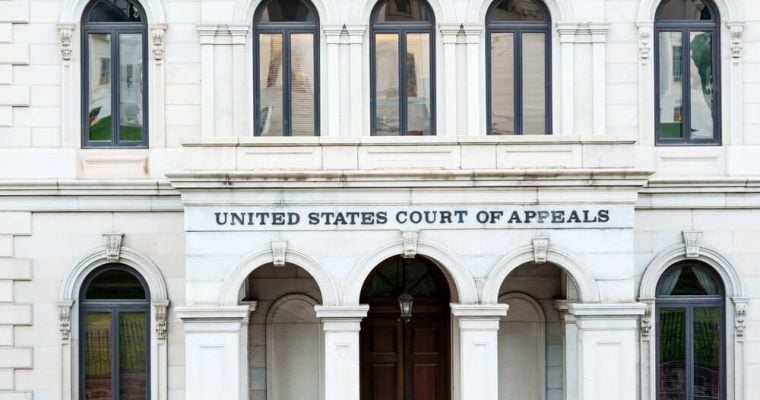
Kalshi recently restricted access to its prediction market platform across three tribal reservations in California: the sovereign lands of Blue Lake Rancheria, Chicken Ranch Rancheria of Me-Wuk Indians, and Picayune Rancheria of the Chukchansi Indians. The move comes following the U.S. Court of Appeals for the Ninth Circuit’s ruling against Kalshi and in favor of the three tribes.
Kalshi attorney Grant Mainland confirmed the move during a status hearing, noting that the company had implemented geofencing restrictions around the three tribes’ lands. However, an attorney for the tribes argued that the restrictions do not eliminate the irreparable harm underlying their lawsuit.
Sports contracts violate tribal gaming laws
In November 2025, the three tribes filed a lawsuit in the U.S. District Court for the Northern District of California seeking a preliminary injunction against Kalshi and Robinhood, which serves as a retail broker distributing Kalshi’s products. However, the district judge rejected the tribes’ complaints, forcing the tribes to file an appeal at the Ninth Circuit.
The tribes’ argument was based on three principles. First, they argued that Kalshi’s operations on their sovereign lands violate the Indian Gaming Regulatory Act (IGRA). Notably, under the IGRA, sports betting is strictly illegal on tribal lands unless explicitly authorized under a state-tribal compact or official secretarial procedures.
Second, the tribes argued that Kalshi’s operations undermine their local economies, causing economic harm. Indeed, native tribes rely heavily on revenue from regulated betting at brick-and-mortar casinos to fund healthcare, education, and infrastructure. Finally, the tribes also accused Kalshi of false advertising under the Lanham Act.
On September 16, the Ninth Circuit ruled in favor of the tribes, partially reversing the District Court’s denial of a preliminary injunction. The court determined that the sports event contracts at Kalshi qualify as Class III gaming under the IGRA. Moreover, it ruled that federal commodities law doesn’t override the tribes’ authority to regulate gambling on their sovereign lands. As a result, the case was sent back to District Judge Jacqueline Scott Corley to consider the remaining requirements for an injunction, including the claim of irreparable harm.
A similar case in New Mexico
The case in California has inspired other similar cases by tribes against Kalshi in other states. In New Mexico, a highly similar case by the Mescalero Apache Tribe, the Pojoaque Pueblo, the Sandia Pueblo, and the Isleta Pueblo against Kalshi is proceeding in federal court. Notably, sports betting in the state is restricted to in-person wagers at tribal casinos.
To this end, the tribes argue that Kalshi bypasses the state’s strict regulations, claiming irreparable harm to their tribal compacts, and undermines their local economies. Considering the precedent set by the Ninth Circuit, a federal judge is deliberating whether to issue a matching injunction against Kalshi in favor of the tribes.
The fight against prediction markets intensifies
Kalshi and other prediction market platforms are dealing with an increasingly hostile legal landscape across various states. Notably, another panel of judges at the Sixth Circuit also recently ruled against Kalshi in favor of Ohio and Tennessee. Kalshi also lost another case against Nevada in the Ninth Circuit. Moreover, the operator is facing multiple other lawsuits at federal and state levels, including an ongoing case in the Fourth Circuit involving Maryland. Interestingly, Kalshi also won one case against New Jersey in the Third Circuit.
Ultimately, Kalshi and other prediction markets maintain their argument that they are under the exclusive jurisdiction of the Commodity Futures Trading Commission (CFTC). However, it appears that state regulators may prevail in their effort to subject the platforms to their gambling laws, considering the recent rulings. However, that decision may lie with the U.S. Supreme Court, considering the split in the Circuit courts.


