





 Share
Share 



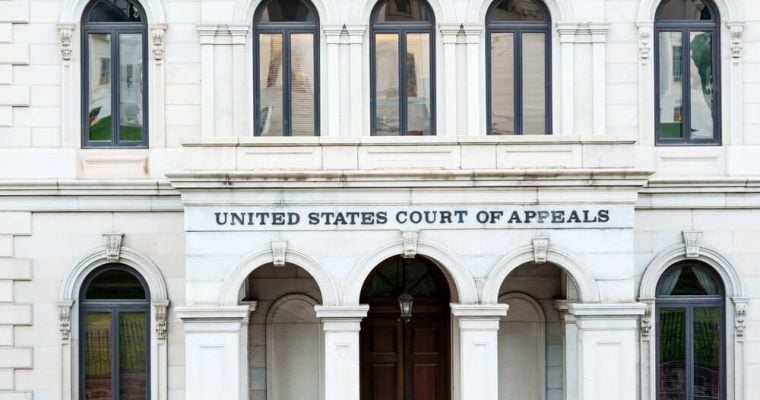
On September 25, 2026, the U.S. Court of Appeals for the Sixth Circuit ruled unanimously against Kalshi and in favor of Ohio and Tennessee. The court’s decision rejected Kalshi’s argument that sports-related event contracts fall under the exclusive jurisdiction of the Commodity Futures Trading Commission (CFTC). Moreover, the court ruled that states can enforce their gambling laws against Kalshi, paving the way for more bans against the prediction market in Ohio, Tennessee, and potentially other states.
Sports event contracts do not qualify as swaps
In its ruling, the three-judge panel determined that sports event contracts at Kalshi do not qualify as swaps under the Commodity Exchange Act (CEA). Judge Julia Smith Gibbons noted that qualifying swaps must involve events that have inherent financial, economic, or commercial consequences. The judge wrote that while sports outcomes may have indirect economic effects, they do not suffice under the statute.
“We hold that Kalshi has not shown that its sports-event contracts satisfy the statutory definition of a ‘swap’ to fall within the scope of the CFTC’s ‘exclusive jurisdiction,’” wrote Judge Gibbons. “Unlike contracts based on financial values or instruments, Kalshi’s sports-event contracts have only downstream economic consequences, assuming they have the potential to cause economic consequences at all.
Moreover, the judge also wrote that even if the sports event contracts qualified as swaps, the CEA had no authority to prevent the states from enforcing their gambling laws. “And, even assuming that Kalshi’s sports-event contracts are swaps, we alternatively hold that the CEA [Commodity Exchange Act] neither expressly nor impliedly preempts Ohio’s or Tennessee’s gambling laws,” wrote the judge.
Moreover, the court ruled that Congress did not preempt all state-regulated over-the-counter derivatives (DCMs) like Kalshi. Indeed, the law says that the CFTC may restrict DCMs from listing event contracts that involve activities that are deemed illegal under state or federal law. “This language necessarily implies that certain event contracts may be listed in some states but not others,” said the panel of judges.
The court also noted that federal law generally defers to state law on gambling. Notably, while Congress specifically preempted state laws in some sections of the CEA, it did not do so in the section outlining the CFTC’s exclusive jurisdiction over swaps. “These provisions underscore that Congress did not expressly preempt state gaming law in § 2(a), because Congress knew how to draft an express preemption provision but chose not to there,” the court said.
Notably, the CFTC had attempted to intervene in this ruling, just like it did in Michigan and New York. The agency filed amicus briefs defending its sole jurisdiction over Kalshi. Moreover, it attempted to appear and present oral arguments. However, the panel shut down both attempts at intervention.
Deepening the split among federal appeals courts
Notably, different federal appeals courts have issued different rulings over whether Kalshi falls under the exclusive jurisdiction of the CFTC. Like the 6th Circuit, the 9th Circuit also ruled against Kalshi and in favor of Nevada in August 2026. However, the 3rd Circuit ruled in favor of Kalshi against New Jersey in April 2026. Moreover, another case in the 4th Circuit involving Maryland is still pending.
According to Kalshi, the differing rulings by different courts on the same question prove that there should be one national standard. “The ruling shows exactly why a state-by-state patchwork doesn’t work. Courts can’t agree on the basics: Some say federal law covers these contracts, and others say it doesn’t. Some recognize that sports have real economic impact, while others (incorrectly) claim they don’t. Markets can’t operate when the rules change at every state line, which is why Congress created a single federal regulator with nationwide rules,” Kalshi said.
To this end, the case is likely headed toward a U.S. Supreme Court review. New Jersey already asked the Supreme Court to settle the matter for all states. Moreover, various state lawmakers have already started filing amicus briefings urging the Supreme Court to weigh in on the matter.
Setting the stage for more state bans
The recent ruling by the 6th Circuit Court of Appeals sets the stage for Ohio and Tennessee – and possibly other states – to enforce bans against Kalshi. Notably, it overturns the injunction that blocked Tennessee from enforcing its gambling laws. In Ohio, regulators have already proposed a fine of $5 million against Kalshi.
“This is a great win for Tennessee. Kalshi attempted an end run around Tennessee law to avoid any of the rules or taxes associated with sports gambling. They failed. Sports wagering is heavily regulated because it can do a lot of harm, and I’m glad we thwarted Kalshi’s efforts to remove every safeguard and put Tennessee sports bettors at risk,” said Tennessee Attorney General Jonathan Skrmetti.


