
 Share
Share 


Inflation does not announce itself at the blackjack table or inside a sportsbook app. It shows up before the player ever logs in.
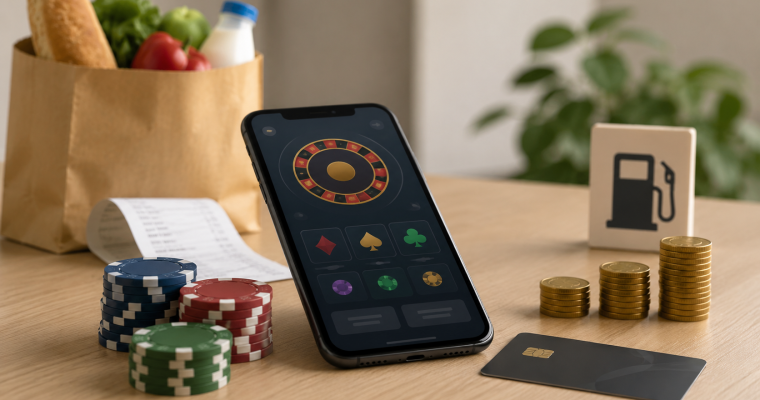
It is there when a grocery run costs more than expected, when gas eats into the weekend budget, when rent resets higher, when a credit card balance that once felt manageable starts carrying a punishing interest rate. By the time someone opens an online casino, sportsbook, sweepstakes casino, or prediction-style betting app, inflation has already changed the way that player thinks about risk.
That is the quiet story. Inflation is not just changing what Americans buy. It is changing how they gamble.
U.S. prices are still pressuring household budgets. The Consumer Price Index rose 3.8% over the 12 months ending April 2026, with energy up 17.9%, gasoline up 28.4%, food up 3.2%, and shelter up 3.3%. Those are not abstract numbers for players. They are the difference between treating a $50 deposit as entertainment and seeing that same $50 as money that might need to stretch until payday.
At the same time, online gambling has never been easier to access. The American Gaming Association reported that U.S. commercial gaming revenue hit a record $78.72 billion in 2025, up 9.2% from the previous year. Gaming is growing, but it is growing inside an economy where many players feel squeezed.
That tension is where the real shift is happening.
The New Online Gambler Is More Budget-Aware
Inflation does not necessarily make people stop gambling. In some cases, it makes gambling feel more appealing. When everything else gets more expensive, a casino bonus, free bet, daily login reward, or low-deposit offer can feel like one of the few entertainment options that still stretches a dollar.
That does not mean players are gambling more recklessly across the board. Many are becoming more selective. They are comparing online casino bonuses more carefully, reading wagering requirements, chasing the lowest minimum deposits, and looking for sites where they can play longer without committing as much cash upfront.
The modern player is not just asking, “Can I win here?” They are asking:
- “How long will my deposit last?”
- “What do I get back if I lose?”
- “Can I cash out without jumping through nonsense?”
- “Is this bonus actually usable, or is it just big-number marketing?”
Inflation has made value more visible. A few years ago, a casual player might have ignored the difference between a 1x playthrough requirement and a 30x requirement. Now, that gap matters. Players are getting sharper because their money has to work harder.
This is especially true in online casino and sweepstakes casino markets, where players often compare platforms based on bonus value, daily rewards, redemption minimums, payout speed, and whether the site feels fair. When household costs rise, “trust” becomes more than a brand promise. It becomes part of the player’s budget calculation.
The $20 Deposit Matters More Than It Used To
Inflation changes the psychology of small deposits. A $20 online casino deposit used to feel like the cost of a movie ticket, a few drinks, or a casual night out. Now, for some players, that same $20 is measured against eggs, gas, lunch, subscriptions, or a minimum credit card payment. That does not make every player financially distressed. It does make the act of depositing feel more deliberate.
This is why low-deposit casinos, no-deposit bonuses, free spins, social casinos, and sweepstakes casinos are getting more attention. They meet players where they are: curious, budget-aware, and less willing to commit large sums just to test a platform.
The value proposition has shifted from “biggest bonus” to “least friction.” A 100% match bonus might look great, but if it requires a $100 deposit and heavy wagering, it may lose out to a smaller offer with clearer terms. A free-play social casino with daily login rewards may feel more practical than a traditional real-money casino that requires a larger first deposit.
This is not just a casino trend, it extends into online sports betting too. Sports bettors are adjusting, too. The old “throw $100 on the game” behavior is being replaced by smaller unit sizes, bonus-led betting, micro-bets, same-game parlays, and live bets designed to create more entertainment out of less money.
That can be good or bad depending on the player. Smaller bets can support better bankroll control. But faster betting formats can also encourage more frequent decision-making, which is where budget discipline can break down.
Inflation Is Turning Bonuses Into a Main Event
In a stronger economy, bonuses are nice. In an inflationary economy, bonuses become part of the decision.
Players are more likely to notice whether an online casino offers a no-deposit bonus, a small first-purchase incentive, daily rewards, cashback, loss-back promotions, or reload bonuses. They are also more likely to spot weak terms.
This is where operators have to be careful. A big headline offer with restrictive terms can backfire with value-conscious players. If someone is already worried about rising costs, they are less likely to forgive a confusing bonus, a delayed payout, or a cashout rule buried in the fine print.
Inflation rewards transparent operators. It punishes platforms that rely on inflated bonus numbers.
The same applies to sportsbooks. A bettor who feels financially squeezed may care more about profit boosts, odds boosts, parlay insurance, bonus bets, and bet credits. But they may also be more skeptical of promos that require them to risk too much of their own money. The best offers in this environment are not just large. They are understandable.
That creates a real opportunity for affiliate sites, reviewers, and comparison pages. Ranking pages that simply list the biggest advertised offer are missing the moment. Players need help separating high-value promos from offers that only look good in a banner ad.
The Rise of the “Stretch My Bankroll” Player
Inflation is creating a different kind of online gambler: the bankroll stretcher.
This player is not necessarily broke. They may have a job, a decent income, and a real entertainment budget. But they are more conscious of leakage. Subscriptions, delivery fees, insurance, rent, utilities, groceries, and gas all nibble away at disposable income. Gambling has to compete with every other paid distraction.
That means players want casino games, formats, and platforms that make a bankroll last.
For casino players, that can mean low-volatility slots, smaller bet sizes, daily free play, social casino coins, sweepstakes bonuses, and games with clearer return-to-player information. For sports bettors, it can mean smaller straight bets, more deliberate futures bets, or low-stakes parlays that offer a sweat without a large outlay.
The danger is that “stretching” can also become rationalization. A player might tell themselves they are being responsible because each bet is small, even as the number of bets climbs. A $2 live bet placed 30 times is still $60. A small-stakes slots session can become expensive if it runs through repeated deposits.
Inflation does not only change bet size. It changes how players justify continued play.
Some Players Are Treating Gambling Like a Side Hustle
One of the more troubling inflation-era shifts is the idea that gambling can help patch a budget.
That mindset is not new, but online access makes it easier to act on. When prices rise faster than comfort levels, some players start looking for money in risky places: sportsbooks, casinos, prediction markets, crypto casinos, sweepstakes redemptions, trading apps, and other speculative platforms.
A survey from Siena College and St. Bonaventure found that 22% of Americans had an active online sports betting account, including nearly half of men ages 18 to 49. The same survey found that 52% of online sports gamblers had chased a bet, 37% had felt ashamed after losing, and 20% had lost money in a way that caused trouble meeting financial obligations.
That matters because inflation creates emotional pressure. A player who is calm, entertained, and betting within a budget behaves differently than someone trying to “make back” grocery money, cover rent, or turn a losing week into a winning one.
Online gambling products can blur the line between entertainment and income fantasy. Sports betting feels analytical. Online poker feels skill-based. Sweepstakes casinos can feel lower-risk because players can often start for free. Prediction markets can feel like trading. But all of these products still involve risk, variance, and the possibility of loss.
Inflation makes the pitch more seductive: maybe this bet can help. For most players, that is exactly the moment to step away.
Credit Pressure Is Part of the Story
Inflation does not operate alone. It often works alongside credit card debt, high interest rates, and thinner savings.
The Federal Reserve reported that consumer credit increased at a seasonally adjusted annual rate of 3.2% during Q1 2026, with revolving credit rising at a 3.8% annual rate. Credit card APRs also remain high, with accounts assessed interest averaging 21.52% in Q1 2026.
That creates a nasty backdrop for online gambling. If a player is gambling with money that would otherwise go toward paying down high-interest debt, the true cost of losing is higher than the bet amount. A $100 gambling loss is not just $100 if it leaves a credit card balance sitting longer at more than 20% APR.
Researchers are starting to connect the dots between online betting and household finances. A New York Fed analysis found that mobile sports betting legalization increased online sportsbook spending roughly tenfold in legal states, while credit delinquencies rose in participating states. The effect was concentrated among people under 40, and nearby counties in non-legal states saw spillover effects as well.
That does not mean every bettor is in trouble. It does mean online gambling is no longer a small side category in consumer finance. It is part of how some households spend, borrow, save, and fall behind.
The K-Shaped Gambling Economy
Inflation does not hit every player the same way.
Higher-income players may keep spending on travel, casinos, sports betting, and entertainment. Lower-income players may feel every price increase immediately. Middle-income players may look fine on paper but become more cautious because their fixed costs have crept up.
The AGA’s 2026 Gaming Industry Outlook noted that the broader economy remains resilient, but also described a “k-shaped” environment where lower-income households face pressure from higher prices while higher-income households continue supporting services spending.
That same split is likely showing up inside online gambling.
For operators, this can create misleading signals. Overall revenue can keep rising even if a meaningful share of players is becoming more strained. High-value customers may continue depositing, while smaller players hunt for bonuses, reduce bet sizes, or move to free-to-play options. The industry can look healthy while the average player feels more cautious.
That is the “quiet” part of the change. Inflation may not cause a dramatic collapse in online gambling activity. Instead, it reshapes the mix: more promo shopping, more free-play interest, more smaller deposits, more bonus sensitivity, more churn, and potentially more risk among players who view gambling as a financial escape hatch.
Why Sweepstakes Casinos Fit the Moment
Sweepstakes casinos and social casinos are especially interesting in an inflationary environment.
They let players access casino-style games without requiring traditional real-money gambling. Most use Gold Coins for social play and Sweeps Coins or similar promotional currencies that may be redeemable for cash prizes or gift cards, depending on the platform and state rules.
For budget-conscious players, the appeal is obvious. You can often claim daily rewards, test games, and play without making a purchase. That gives sweepstakes casinos a “low-pressure entertainment” angle that real-money casinos cannot always match.
But this category is also under more scrutiny. In 2025, several states moved to prohibit sweepstakes gaming platforms that mimic online casinos or sportsbooks, while regulators continued taking action against offshore and illegal operators. The AGA has also argued that unregulated gaming devices, offshore sportsbooks, and illegal online casinos generate significant annual revenue outside regulated channels.
That means inflation could push more players toward low-cost alternatives at the exact moment lawmakers are paying closer attention to how those alternatives work.
For players, the takeaway is simple: free-to-play does not automatically mean risk-free. Always check redemption rules, state availability, playthrough requirements, KYC policies, and whether a platform clearly explains how its currencies work.
What Operators Should Understand Right Now
Inflation-era players do not just want more promotions. They want better promotions.
The brands that win trust in this market will likely do a few things well:
- They will make minimum deposits clear.
- They will explain wagering requirements in plain English.
- They will offer realistic bonus values, not just giant numbers.
- They will process withdrawals reliably.
- They will provide responsible gambling tools that are easy to find and easy to use.
- They will avoid treating financially anxious players like easy targets.
This is a major content opportunity, too. Players need rankings that reflect the real value of a gambling site in 2026, not just old-school affiliate metrics. A strong review should weigh bonus usability, payout speed, app experience, customer support, safety, licensing, responsible gambling tools, and the actual cost of playing.
In an inflationary economy, “best casino bonus” does not mean biggest bonus. It means the offer that gives players the clearest, fairest, most realistic path to value.
What Players Should Do Differently
The smartest players are not pretending inflation does not exist. They are building it into how they gamble.
That means setting a gambling budget after essentials, not before. It means treating gambling as entertainment, not income. It means avoiding credit card-funded play whenever possible. It means understanding that a bonus is only valuable if the terms are reasonable. It means walking away when gambling starts to feel like a solution to money stress.
The best rule is still the simplest: never gamble with money you need for bills, debt, food, rent, transportation, or savings.
Inflation makes that rule more important, not less.
The Bottom Line
Inflation is changing online gambling because it is changing the player before the first bet is placed.
It is making some players more cautious and more value-driven. It is pushing others toward bonuses, low-deposit offers, sweepstakes casinos, and free-play models. It is encouraging smaller bets, longer sessions, and more bankroll stretching. It is also increasing the danger for players who start seeing gambling as a way to fight back against rising costs.
The industry may keep growing. The apps may keep getting smoother. The offers may keep getting louder. But under the surface, the American player is doing new math.
That math is not just about odds. It’s about gas, groceries, rent, credit cards, and whether a night of online gambling still feels like entertainment when everything else costs more.