



 Share
Share 



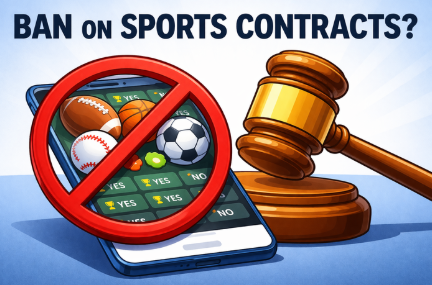
A new bipartisan bill led by Senators Adam Schiff and John Curtis — the Prediction Markets Are Gambling Act — is aiming to bar companies regulated by the Commodity Futures Trading Commission from listing contracts tied to sporting events.
This legislation aims to kick sports out of prediction markets entirely.
And depending on who you ask, it is either a necessary fix or a major overreach.
Drawing a hard line between trading and betting
Lawmakers backing the Prediction Markets Are Gambling Act believe sports event contracts function like betting and should be treated that way.
If successful, this would mean sports-event contracts would be regulated by individuals states, making them illegal in jurisdictions that do not have legal online sports betting.
Schiff did not mince words when explaining the push behind the bill.
“Sports prediction contracts are sports bets—just with a different name. And yet, these contracts are currently offered in all fifty states in clear violation of state and federal law. Rather than enforce the law, the CFTC is greenlighting these markets and even promoting their growth. It’s time for Congress to step in and eliminate this backdoor, which violates state consumer protections, intrudes upon tribal sovereignty, and offers no public revenue. I’m proud to partner with Senator Curtis to put a stop to these illegal markets.”
Curtis, on the other hand, leaned into the social impact.
“Too many young people in Utah are getting exposed to addictive sports betting and casino-style gaming contracts that belong under state control, not under federal regulators. Our bipartisan legislation clarifies regulatory jurisdiction, ensuring that states can maintain their authority over sports betting and casino gaming. The Prediction Markets Are Gambling Act is about respecting states’ authority, protecting families, and keeping speculative financial products out of spaces where they don’t belong.”
Meanwhile, a spokesperson for Kalshi, Elisabeth Diana, is arguing that banning sports contracts on regulated platforms could have unintended consequences.
“Banning sports on regulated prediction markets would just push this behavior offshore, where no regulation exists,” she said. “It’s clear this bill is motivated by casino interests that are threatened by competition. They’re more worried about protecting their monopolies than protecting consumers.”
What are these markets doing differently now?
For platforms like Kalshi, this is a volatile moment. They’re trying to prove they can be responsible grown-ups without a new law breathing down their necks.
On issues like insider trading, Kalshi has launched new technology that automatically blocks people like athletes, coaches, and referees from trading on games in their own leagues. They even added a whistleblower button directly on their trading pages so the community can snitch on suspicious activity in real time.
Meanwhile, Polymarket is playing the same game from a slightly different angle.
They just rolled out Market Integrity pages that serve as a rulebook for traders and a “see something, say something” hotline for reporting shady behavior.
They are officially declaring war on all the classic market-rigging tricks. This includes everything from insider trading and wash trading (faking volume) to spoofing and front-running.
To actually catch these hackers and hustlers, they are partnering with Palantir and TWG AI to build an AI-powered surveillance engine that watches every move in real time.