



 Share
Share 



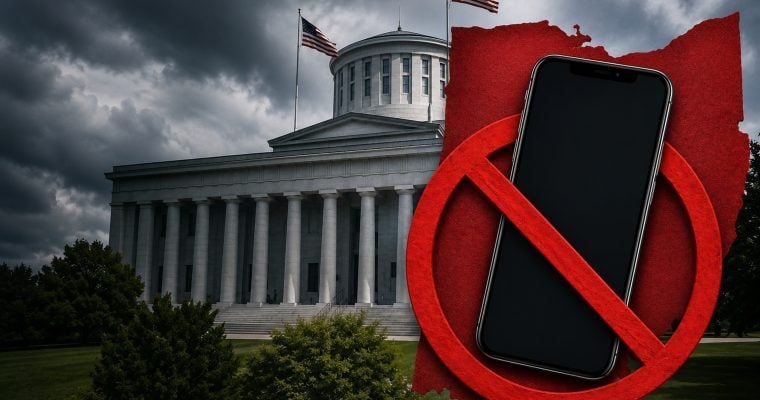
Prediction markets have rammed into a roadblock in Ohio, and this time it’s not a cease and desist letter. It is Google.
The tech operator has updated its advertising rules to ban prediction market advertisements in Ohio.
This is not the first but the second jurisdiction in the United States where such ads are no longer allowed. Nevada was the other state on the list.
The policy took effect on June 2 and prevents companies offering prediction market contracts and related products from promoting themselves through Google Ads in Ohio.
This one is touchy, because for the industry that has spent the past two years aggressively marketing itself as the future of forecasting and event trading, losing access to the world’s largest advertising platform is hardly a small inconvenience.
Ohio has been fighting prediction markets for more than a year
Anyone surprised by Google’s decision has probably not been paying attention to Ohio’s ongoing battle with prediction markets.
Back in April 2025, the Ohio Casino Control Commission sent cease and desist orders to Kalshi, Robinhood, and Crypto.com over the offering of sports event contracts within the state.
Kalshi responded the way it often does these days. It sued.
The company went to court against the Ohio Casino Control Commission and the Ohio Attorney General’s Office, arguing that its contracts are federally regulated derivatives; hence, the state has no rule over them.
Where is Google’s interest placed?
Google originally opened the door to prediction market advertising in January 2026. It permitted licensed operators to advertise in most of the country. The company cited the regulatory nature of prediction markets and provided a certification manual for approved advertisers.
“Google is updating its advertising policies on January 21, 2026, to permit ads for prediction markets (defined as platforms that facilitate the listing of or provide customer access to exchange-listed event contracts related to economics, sports, or current events) in the United States, but only for federally regulated entities. Eligibility is limited to entities who meet the following criteria:
- Those authorized by the Commodity Futures Trading Commission as a Designated Contract Market (DCM) whose primary business must be the listing of Exchange-Listed Event Contracts (e.g., specialized platforms listing economic or sports outcomes); or those authorized as a brokerage by the National Futures Association (NFA) to offer third-party access to products listed by a DCM that meets the criteria specified above,” the Google advertising policy read.
Ohio was initially included in this list. Now, things have changed.
But questions are still left unanswered. Google has not publicly provided a detailed explanation for singling out Ohio.
Before we could even accuse the Ohio Casino Control Commission of having a hand in this, Andromeda Morrison, OCCC interim executive director, already said in a report that all this is happening independent of them. Although she acknowledged that they are happy about the decision.
So what now happens in Ohio? For now, residents searching online will likely see fewer prediction market advertisements than they did a month ago.