


 Share
Share 



Iowa Governor Kim Reynolds has officially signed Senate Bill 1589, which now gives state regulators stronger authority to go after sweepstakes casinos.
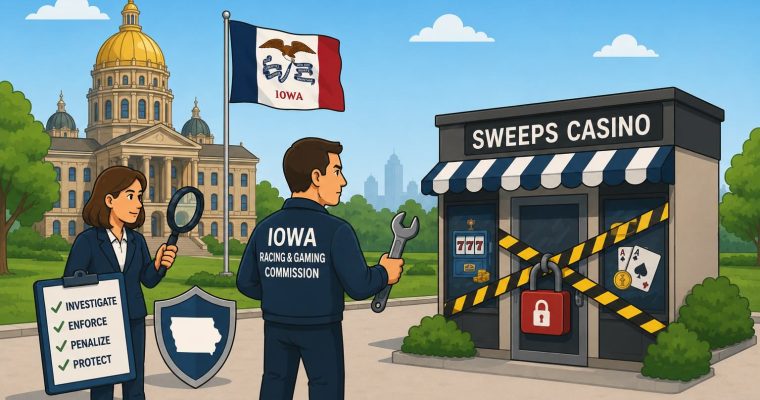
What this means is that the Iowa Racing and Gaming Commission now has the power to investigate, penalize, and shut down certain sweepstakes-style casino operations that they believe cross the line into illegal gambling territory.
What Iowa’s New Sweepstakes Casino Bill Actually Does
The legislation does not outright ban sweepstakes casinos the way states like Montana and Connecticut have attempted to do.
The new law allows them to go after operators offering:
- Slots
- Casino-style games
- Sports prediction products
- Dual currency systems involving redeemable prizes
Especially if players can exchange virtual currency for cash rewards or prize equivalents.
Why Iowa Regulators Decided To Crack Down
Traditional casino operators and regulators have grown frustrated watching sweepstakes casinos operate outside the same licensing structures, tax systems, and compliance requirements that regulated gambling companies must follow.
To them, the current system feels uneven.
Imagine opening a fully licensed restaurant while somebody next door sells suspiciously similar food from a folding table and somehow avoids all the permits.
That is basically how many regulated gaming operators now view sweepstakes casinos.
Sweepstakes Casinos Face Growing Pressure Nationwide
Iowa is far from alone in this chase.
Over the past year, states across America have started tightening the screws on sweepstakes gaming.
Oklahoma recently overrode a governor’s veto to pass one of the toughest anti-sweepstakes laws yet. Connecticut banned sweepstakes casinos completely. Montana also approved aggressive restrictions.
Louisiana, New York, New Jersey, and several other states have introduced bills targeting the industry.
What Happens Next for Sweepstakes Operators in Iowa
The Iowa Racing and Gaming Commission now has broader authority to investigate platforms it believes violate state gambling law.
That could lead to:
- Cease and desist orders
- Financial penalties
- Enforcement actions
- Platform restrictions
- Operator exits from the state.
Many companies may decide Iowa is simply no longer worth the risk.
Others could attempt to restructure their products to appear more clearly “social gaming” focused by limiting prize redemption systems or removing Sweeps Coin functionality altogether.
On the patron side of things, Iowa players may suddenly lose access to platforms they have used for years. And that creates a side effect lawmakers continue wrestling with.
Because when legal market products disappear, players do not always stop gambling online. Sometimes they simply drift toward offshore casinos instead.
And offshore platforms often come with weaker consumer protections and fewer responsible gaming safeguards.