


 Share
Share 



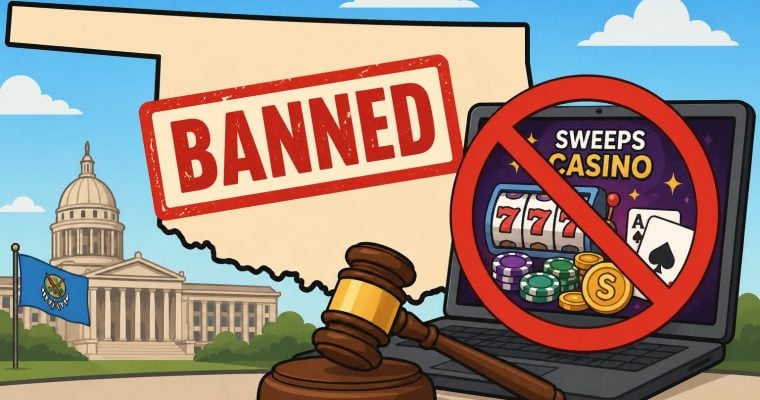
Oklahoma lawmakers looked Governor Kevin Stitt dead in the eye and overruled his veto on the anti-sweepstakes casino bill.
And this was not done quietly.
The Senate started by blocking the mission with a 34-10 vote. Then the House followed with a 68-19 vote. Those numbers easily cleared the two-thirds majority needed to override the governor’s decision, which means Senate Bill 1589 is now officially law in Oklahoma.
Now sweepstakes casinos across the state are staring at a very serious problem.
After the ban takes effect, players will still have access to sites like BetRivers Net and Hard Rock Jackpot Planet.
Free Bingo Games Daily
Get $VC 500 FREE on Signup
BONUS $VC 200 On Deposit
Free Bingo Games Daily
Get $VC 500 FREE on Signup
BONUS $VC 200 On Deposit
$1 Million Dollar Giveaway at Hard Rock Jackpot Planet
Large Slot Selection - Includes Classic, Megaways & Progressive titles
Earn Cash & Real Prize Draw Entries Every 50 Spins
$1 Million Dollar Giveaway at Hard Rock Jackpot Planet
Large Slot Selection - Includes Classic, Megaways & Progressive titles
Earn Cash & Real Prize Draw Entries Every 50 Spins
Why Did Governor Stitt Veto the Bill Banning Sweeps Casinos?
Stitt’s argument was not exactly “I love sweepstakes casinos.” His bigger concern was that the bill was too broad and too aggressive.
The governor warned that the language could accidentally criminalize apps and games people casually use for entertainment. He also criticized the felony penalties attached to the legislation.
“This bill is so broad that it criminalizes everyday apps people use for fun. It also unnecessarily creates a new felony and extends criminal liability to businesses and service providers,” he said.
“That kind of vague and overbroad approach creates uncertainty for businesses operating in good faith and discourages innovation and investment in our state. Oklahoma can protect consumers without adopting criminal penalties that reach beyond the problem they are intended to solve.”
What the New Law Actually Does
The law specifically targets online casino-style games that use dual currency systems. That includes platforms offering:
- Slots
- Bingo-style games
- Lottery-style products
- Casino simulations
- Social sportsbooks tied to Sweeps Coins
Under the new law, operators and even certain companies connected to sweepstakes platforms could face Class C felony charges.
The targeted chain includes:
- Operators
- Suppliers
- Payment processors
- Geolocation providers
- Affiliates
- Promoters
What Happens Now?
The law takes effect on Nov. 1, 2026.
That gives sweepstakes operators a few months to decide what comes next.
Most likely, many platforms will simply exit Oklahoma completely before the deadline. That has already happened in other states where anti-sweepstakes laws passed.
What’s at Stake Here?
Honestly, quite a lot.
Oklahoma is home to tribal gaming facilities. Brick-and-mortar tribal casinos contribute hundreds of millions in exclusivity fees to the state. Untaxed, unregulated online competitors were significantly impacting their revenue.
By easing the sweepstakes market, lawmakers are protecting the traditional gaming revenue streams that fund Oklahoma public schools and infrastructure.
Indiana and Maine have already passed similar bans this year, and other states are also watching closely.