



 Share
Share 



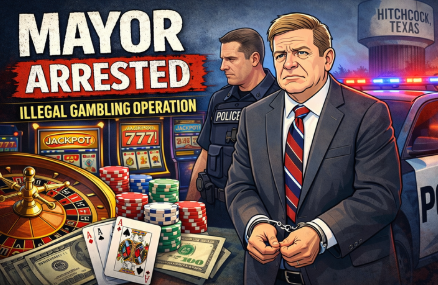
If you thought the town of Hitchcock, Texas, was only famous for its quiet streets, you clearly haven’t been checking the local laundromat lately. Hitchcock Mayor Christopher Armacost was arrested on February 18, 2026, as part of a gambling sting operation.
The mayor, who also happens to be a high-ranking school district official, allegedly traded textbooks and town hall meetings for a secret game room empire. Investigators say he was running a “washateria” called the Comfort Zone, but the only thing getting cleaned there was the wallets of players in the backroom.
The Laundromat Gamble
The Galveston County Sheriff’s Office didn’t just stumble into this because they hit twenty different locations in a single afternoon. This was the result of a five-month undercover sting that felt more like a movie than a local news story.
An undercover officer actually walked into the mayor’s laundromat and spent twenty dollars on the hidden machines. When he won a few tickets and traded them for cold hard cash, the trap was set. Police later searched the phone of a front desk worker and found text messages connecting the mayor directly to the secret casino operation.
The numbers from the raids across town were
- 749 gambling machines seized
- $417,000 in cash recovered
- 33 people arrested in total
- 8 firearms found on site
The sheriff said he was stunned to find a sitting mayor in the middle of an organized crime ring, especially since Armacost had supposedly promised to help “clean up” the town’s game room problem just a few months earlier.
In a statement that neither denied nor accepted the charges being faced, the Major stated he wished for the matter to be handled privately away from the media.
“Some of the most important rights granted to Americans by the Constitution are the presumption of innocence and the right to confront your accusers in court to test the strength of those accusations. I have been charged by the state with offenses as a private citizen and business owner. Neither my work as mayor for the City of Hitchcock nor my work as an administrator for Hitchcock Independent. The school district has been implicated in these charges. It is with that in mind that I intend to defend myself as a private citizen and decline to fight this case in the media. This case will be resolved in court, as is right and proper.”
Texas Gambling: The Land of “No”
If you are wondering why someone would hide slot machines behind a washing machine, it is because Texas is one of the strictest states in the country. Almost everything that involves a bet and a prize is a big “No” in the Lone Star State.
Currently, if you want to gamble legally in Texas, your list is basically a sticky note:
- The State Lottery
- Horse and Dog Racing
- Charitable Bingo
Texas law specifically bans “eight-liners,” which are those video slot machines. You can technically have them for “entertainment only” if you give out cheap prizes like stuffed bears or keychains, but the second you start handing out cash like the mayor allegedly did, it becomes a felony.
Is the Law Ever Going to Change?
There is a tiny hope for Texans who want to bet without visiting a laundromat. A bill called HJR 137 was introduced for the 2025–2026 legislative session.
This bill proposes a constitutional amendment that would finally let the voters decide on “Destination Resorts” and sports wagering. If it passes, it would create a Texas Gaming Commission to regulate the industry and throw a tax on the revenue to fund schools and public safety.
But don’t hold your breath just yet because similar bills have died in the Texas Senate more times than a horror movie villain. Since the regular session ended in 2025 without a deal, the doors to the Capitol are locked for 2026. Unless the governor calls a “special session”—which is about as likely as a snowstorm in Laredo in July—lawmakers won’t even look at this again until January 2027.
For now, the only legal way to get your fix online is through “social sportsbooks” and “sweepstakes casinos” like RealPrize or McLuck, which use virtual coins to stay on the right side of the law.