


 Share
Share 



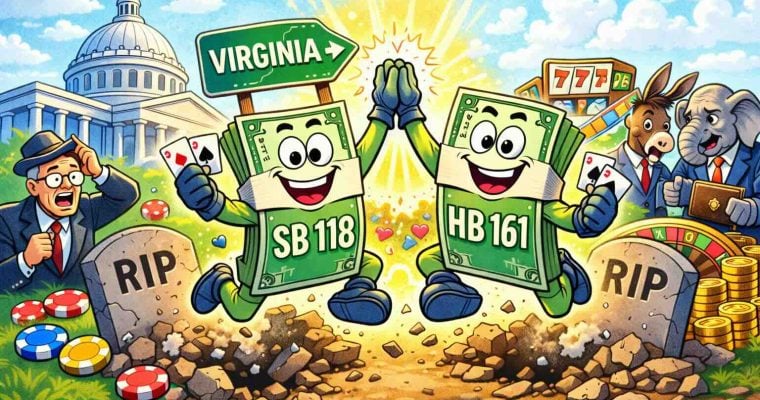
The halls of Richmond have turned into a theater recently, with not one but two online casino bills pulling off a “Lazarus” move by rising from the dead just when everyone thought they were out for the count.
Here is the full gist on Virginia twin bills SB 118 and HB 161 that are currently racing toward the finish line.
The Double Comeback
First, on Feb. 16, the Senate version (SB 118) actually failed its initial vote. Most observers started packing their bags, but just hours later, a “reconsideration” move brought it back to the floor, where it got through with a 19-17 victory.
Not to be outdone, the House of Delegates had its own moment on Feb. 17. Its version, HB 161, also failed on its first attempt, but delegates called for a do-over just an hour later and passed it with a much more comfortable 67-30 margin.
The Bill Shuffle
Since both bills survived their respective chambers by the “Crossover Day” deadline, they have now swapped places. The Senate is looking at the House bill, and the House is looking at the Senate bill. While they both want the same thing — legal online blackjack and slots — they have two very different ideas on how to get there:
The Senate (SB 118) plan: The reason SB 118 was resurrected was that lawmakers made some very specific adjustments to calm the nerves of those who were originally voting “No.” The change was a “delayed launch.” We pass the law now, but the apps don’t actually turn on until July 1, 2027.
The House (HB 161) plan: They are even more cautious. They want a “two-session requirement,” meaning the bill has to pass this year and pass again in 2027 before anyone can place a legal bet.
What Do the Figures Say?
Despite all the drama, both bills mostly agree on how the money should work. They are looking at a 15%-20% tax on revenue, with the majority of that cash, about 95% , going to the Modern Public Education Fund.
The state is also playing favorites with the “guest list.” Only the five licensed land-based casino operators (like Caesars Danville and Hard Rock in Bristol) would be allowed to play. Each one could launch up to three different online platforms, but they would have to pay a $2 million platform fee and a $500,000 licensing fee just to get in the game.
Opposition Party Still Looms
While the bills are moving forward, it hasn’t been a walk in the park. In Virginia, the “opposition parties” aren’t just political rivals; they are a mix of business competitors, community groups, and lawmakers.
The Cordish Companies (who are developing a casino in Petersburg) and Churchill Downs (which operates historical horse racing) have voiced concerns. They fear that online apps will “cannibalize” their businesses. If people can play slots on their couch, they might stop visiting the physical casinos, which could hurt local jobs and the “resort” economy.
Even groups like the Virginia Assembly of Independent Baptists and the Campaign for Fairer Gambling argue that online gambling is an addictive gambling product because it’s available 24/7.
“We are being asked to take the single most addictive device in human history, the smartphone … and now we’re being asked to put a slot machine on it; let that sink in for a moment,” Sen. Bill Stanley said.
The next few weeks will decide if these concerns are enough to stall the momentum.
The House and Senate now have to sit down for a legislative “summit” to merge their game plans before the session wraps up on March 14.