



 Share
Share 



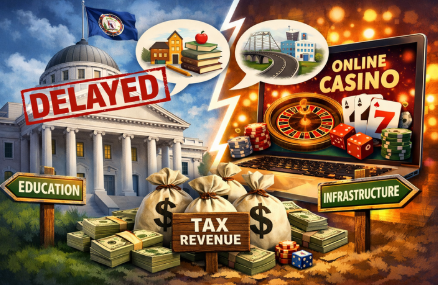
Virginia just gave the “it’s not you, it’s me” speech to online casino enthusiasts. The 2026 legislative session finally came to an end on March 14, and despite a lot of flirting with the idea of legalizing online casinos, lawmakers decided to leave the iGaming bill on the shelf.
The delay stems from disagreements between the House and the Senate over how to handle potential tax revenue from online casinos. Virginia currently has a $1 billion budget hole.
Why the delay?
It wasn’t for a lack of trying. Both the House and the Senate actually passed their own versions of a Virginia online casino framework.
Both chambers agreed on a 20% tax rate, but the Senate wanted 95% of that revenue to flow into the state’s education fund. The House had a much more complicated formula, including a “hold harmless” fund for the lottery and a larger part for the general fund.
Even if they had agreed on the math, the House added a “reenactment clause” to the bill. This means the law would have had to be passed all over again in the 2027 session before a single digital card could be dealt.
What does this mean for your phone?
For now, the only legal gambling you can do on your smartphone in the Commonwealth is sports betting and the online lottery. If you were hoping to play a few hands of blackjack while waiting for your Uber, you are going to be waiting at least another year for the conversation to start back up.
The delay is music to the ears of groups like the National Association Against iGaming (NAAiG), who spent the session warning about the potential for job losses at brick-and-mortar casinos.
“Virginia lawmakers made the right decision by rejecting online casino gambling. This proposal would have placed casino-style gambling on every phone and smart device, creating serious risks for families, workers, and local communities. Policymakers demonstrated leadership by putting people before profit,” said NAAiG spokesman Oliver Barie in a press statement.
On the other hand, it’s a tough pill to swallow for the state’s five licensed casinos, which were hoping to launch up to three online platforms each to reach players who don’t want to drive to Danville or Portsmouth.
The silver lining (maybe?)
While iGaming stalled out, lawmakers did manage to push through a few other gaming-related items. They reached a compromise on daily fantasy sports (DFS) that includes a new 10% tax on revenue. They also moved forward with a plan that could allow a new casino in Fairfax County.
So there’s still an appetite for gambling expansion in the state. It is likely that some bills will be resurrected in early 2027 to address tax distribution concerns.