


 Share
Share 



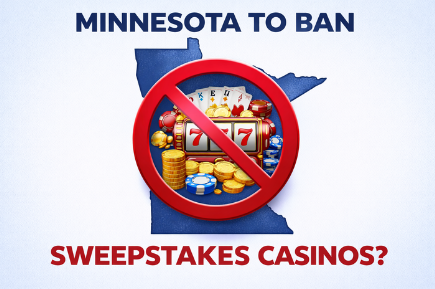
You know how everyone in Minnesota has been quietly playing with social casinos on their phones while the state figures out real sports betting? Well, the party might be crashing sooner than we thought because lawmakers in Saint Paul are moving fast to pull the plug on the whole operation.
Bipartisan bills House File 4410 and Senate File 4474 are flying through committees right now, and they have one very specific target in their sights: the dual-currency sweepstakes model.
Why the sudden “U-turn” in Saint Paul?
Supporters like Representative Gregory Davids say these platforms are unregulated casinos that skip out on taxes and don’t have to abide by the consumer protections that regulated markets have to follow.
The attorney general, Keith Ellison, has already been flexing his muscles by sending cease-and-desist letters to 14 different sweepstakes casino operators.
The counter-punch: “You’re pushing us offshore!”
Not everyone is cheering for the ban, though.
Guys like Patrick Fechtmeyer, the CEO of ARB Interactive, says this move is a case of throwing the baby out with the bathwater. He believes that by banning responsible U.S.-based social gaming companies, the state is just handing its citizens over to shady offshore operators who hide behind shell companies and offer zero protection if you get scammed.
“Participation in our sweepstakes is always, free with clear alternative methods of entry, and compliance with state law is central to how we operate. I grew up in the first generation native to the Internet, and one lesson has become very clear. When you try to ban digital behavior that people want, it doesn’t disappear.
If this bill is passed, it will not eliminate this activity. Instead, it’ll push Minnesotans to the more than 1,100 offshore operators who hide behind shell companies and don’t comply with consumer protections or sweepstakes laws, while companies like ours—companies that have roots in Minnesota—invest heavily in age verification, geolocation, compliance, and consumer protections and believe in proactive engagements with stakeholders,” said Fechtmeyer.
The Social Gaming Leadership Alliance is also worried that the bill is too broad and the ban could be taking potential revenue off the table.
“We want to engage with the state and a regulatory and taxing framework, which could generate significant revenue for the state. Social plus games do not compete against casinos and charitable organizations. The way people participate in these games is entirely different from real-money gambling. No money or consideration is ever required for a player to enter the sweepstakes. More than half of the participants never spend any money to play these games,” said Lexi Morgan, a member of the Social Gaming Leadership Alliance.
Besides the money talks, there are also concerns of unemployment that’ll loom if these bills pull through.
“It would put a lot of these folks out of business. What I want to be able to determine is who’s operating legally and who is not operating legally, and let’s go after the ones that are not operating legally. I think on a lot of the sweepstake stuff—we’ve [the state] been doing it for years,” said Rep. Gregory Davids.