



 Share
Share 



When Pete Rose was banned in 1989 for betting on baseball, the league treated gambling as an existential threat.
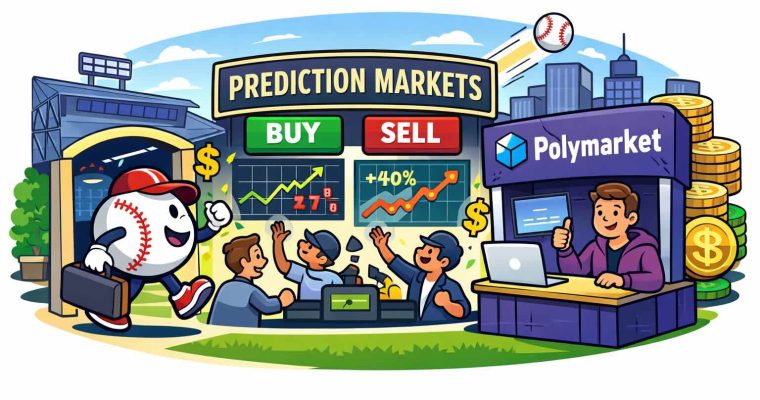
More than three decades later, MLB has reached an agreement with prediction market platform Polymarket, highlighting how dramatically its approach to wagering has shifted in a legalized and regulated era.
The deal allows Polymarket to access official MLB data and operate with league cooperation, as the platform continues to work under regulatory oversight in the United States.
A New Type of Sports Wagering
Polymarket operates differently from traditional sportsbooks. Instead of fixed-odds betting, users trade shares tied to the outcome of real-world events, including sports results.
Prices fluctuate based on perceived probability, creating a market-driven system that more closely resembles financial trading than conventional wagering.
MLB’s involvement does not mean the league is launching its own betting product. However, the agreement positions the league within a fast-growing segment that sits between gambling and financial markets.
Why MLB Is Getting Involved
The partnership reflects broader industry trends. Professional sports leagues have already embraced online sportsbooks through data deals and sponsorships, but prediction markets represent a newer category with a different user base and engagement model.
By working with Polymarket, MLB gains early exposure to this space while maintaining control over how its official data is used.
The move also allows the league to monitor how prediction markets evolve without committing to a fully integrated betting product.
Regulatory Framework Still Developing
The agreement comes as Polymarket operates under the oversight of the Commodity Futures Trading Commission (CFTC), following prior regulatory scrutiny related to event-based contracts.
While the platform has taken steps toward compliance, the broader regulatory landscape for prediction markets remains unsettled.
Key questions include:
- Whether prediction markets fall under derivatives trading or gambling laws
- How state-level gaming regulations apply
- What limits, if any, will be placed on sports-related contracts
Polymarket and similar platforms have faced regulatory scrutiny in recent years, including enforcement actions and ongoing debates over how they should be classified and governed.
As those questions remain unresolved, partnerships like this one are likely to draw increased attention from regulators.
What Comes Next
The MLB–Polymarket agreement does not immediately change how fans interact with the league, but it highlights a shift in how sports organizations are thinking about wagering and engagement.
Prediction markets remain a niche product compared to sportsbooks, but they are gaining traction, particularly among users interested in trading-style mechanics.
If the model proves viable within U.S. regulations, similar partnerships across other leagues could follow.
For now, MLB’s move positions it at the forefront of a space that is still being defined.